


24-06-2026
Roughly 80% of commercial buildings will experience a roof leak at some point in their lifespan, and in many cases, the underlying cause traces back to maintenance that simply didn’t happen. For Baton Rouge property owners, that statistic carries extra weight.
Between intense summer heat, near-constant humidity, and a hurricane season that runs from June through November, commercial roofs in our area take on more stress than almost anywhere else in the country.
A small leak or a handful of missing membrane fasteners might not seem urgent today. Left unaddressed through one more storm season, that same issue can spread into decking, insulation, and interior finishes, turning a routine repair into a five-figure replacement.
This guide walks through why regular roof maintenance matters, what to watch for, and how a proactive plan protects both your building and your bottom line.
Louisiana’s climate is uniquely hard on flat and low-slope commercial roofing systems. Heat radiating off a TPO or modified bitumen membrane all summer, paired with sudden afternoon downpours, creates a cycle of expansion and contraction that wears down seams and flashing faster than in drier, cooler regions. Add in wind-driven rain from tropical systems, and even a well-installed roof can develop vulnerabilities within just a few years.
Many Baton Rouge property managers go months between close inspections simply because nothing is visibly wrong from inside the building. By the time a tenant reports a ceiling stain, water has often already reached the insulation and structural decking. Routine maintenance closes that gap by catching problems while they’re still small and inexpensive to fix.
Roof maintenance tends to fall to the bottom of a facility manager’s list because the consequences aren’t immediate. There’s no daily reminder that a roof needs attention, unlike a broken HVAC unit or a parking lot pothole. That invisibility is exactly what makes neglect so costly over time.
Small, fixable issues, missing flashing, a clogged drain, and a section of granule loss don’t announce themselves loudly. They sit quietly until a storm pushes water through the weak point, and by then the damage has often spread into areas that are far more expensive to repair than the original problem would have been.
A proper maintenance program goes beyond a glance from the parking lot. At Red Stick Construction, our commercial roofing team builds maintenance plans around the realities of Louisiana’s climate, not a generic checklist borrowed from a drier region.
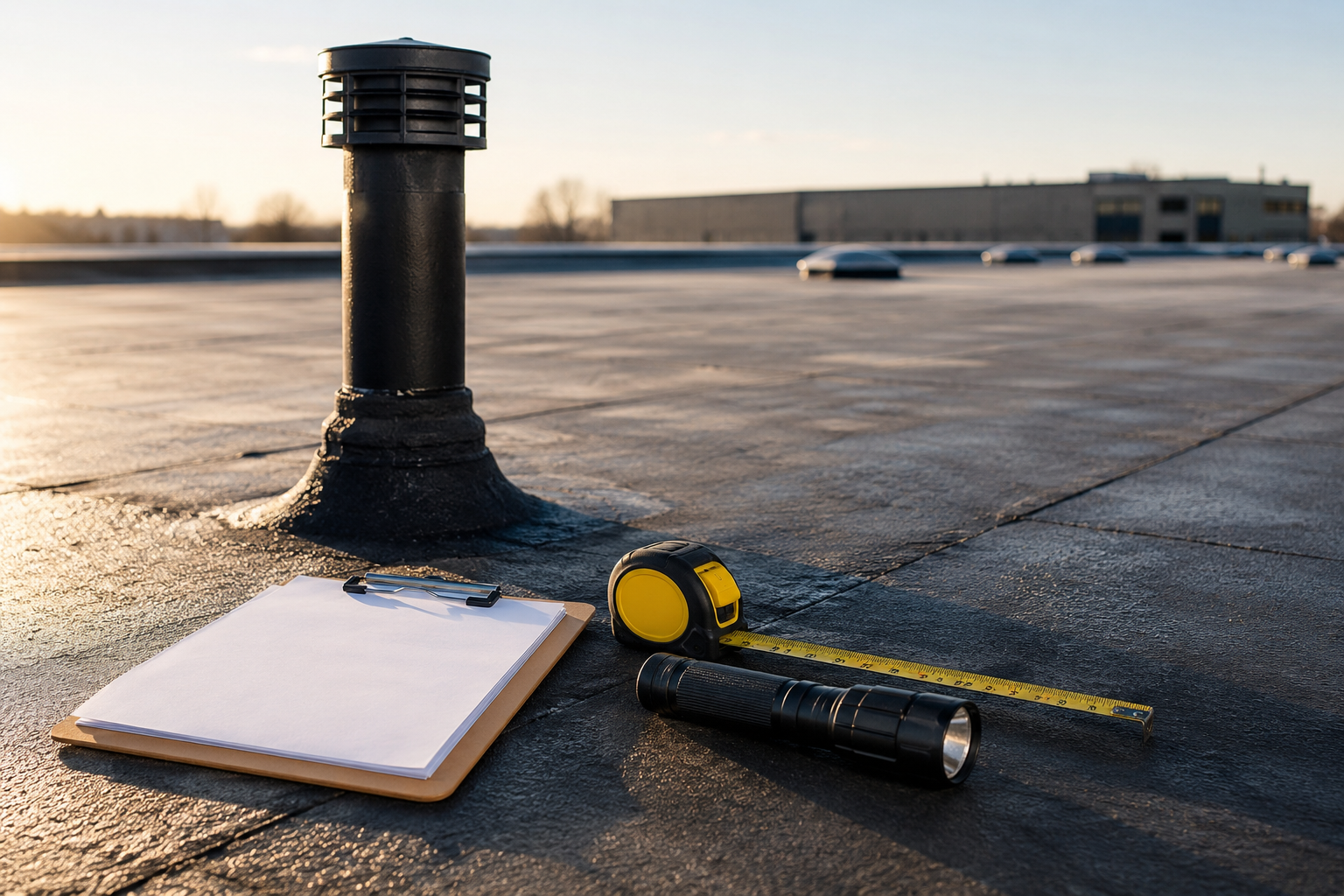
A solid plan typically includes a biannual inspection schedule, paired with prompt follow-up after any significant storm. We look at flashing, drainage, membrane condition, and rooftop equipment seals, document everything with photos, and provide straightforward recommendations rather than padding a scope of work with unnecessary line items.
The math on roof maintenance is straightforward once you see it laid out. A targeted repair, replacing a section of flashing or resealing a seam, typically costs a fraction of what a full commercial re-roofing project runs.
In the Baton Rouge market, a full commercial roof replacement generally falls somewhere between $6 and $12 per square foot, depending on the material and roof condition, so a building with even moderate square footage is looking at a project that can stretch into the tens of thousands of dollars, or more for larger facilities.
Compare that to routine maintenance costs, which are a small recurring expense, and the value of staying ahead of problems becomes clear. Beyond direct repair costs, a well-maintained roof also protects your building’s energy efficiency.
A compromised membrane or missing insulation lets conditioned air escape, which means your HVAC system works harder and your utility bills climb, often before anyone realizes the roof is the culprit.
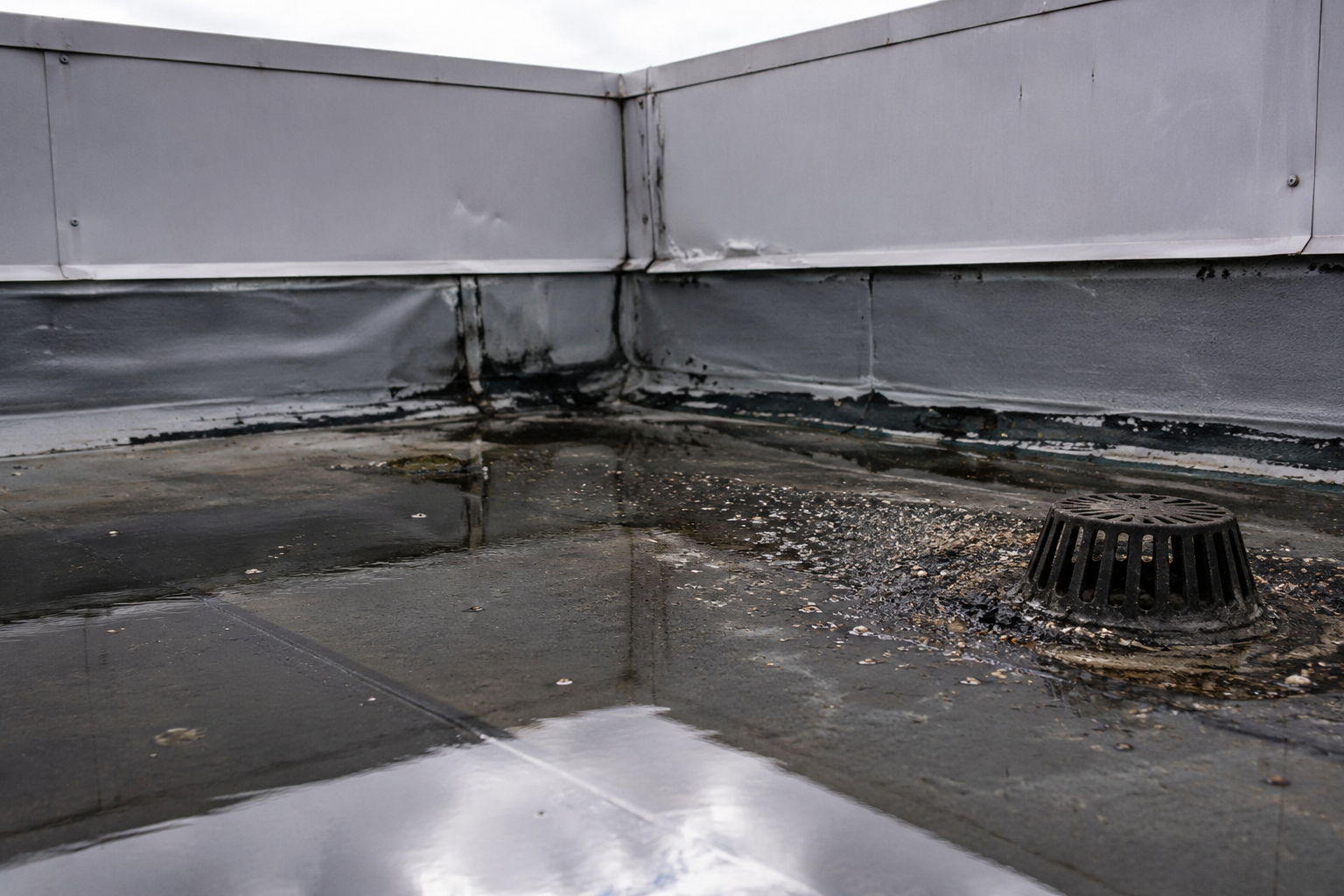
Some warning signs are visible from ground level; others only show up once you’re on the roof or in the building. Knowing what to look for helps you act before a manageable issue becomes a major one.
If any of these sound familiar, an inspection should move to the top of the list rather than waiting for the next scheduled visit.
Regular roof maintenance is one of the most cost-effective investments a Baton Rouge property owner can make in protecting a commercial building. Red Stick Construction offers free estimates and inspections for commercial properties throughout the greater Baton Rouge and New Orleans area. Reach out to our team to schedule an assessment before small issues turn into expensive ones.
Twice a year is a reasonable baseline for most commercial properties in South Louisiana, once after hurricane season ends in late fall and again in spring before summer heat and storm activity ramp up. Roofs older than 15 years, or roofs that have already taken storm damage, benefit from more frequent professional inspections.
Lifespan depends heavily on material. TPO and EPDM membrane systems generally last 20 to 30 years, while standing seam metal roofing can reach 40 years or more with proper maintenance. Louisiana’s heat and humidity tend to push roofs toward the shorter end of these ranges when maintenance is inconsistent.
Coverage typically depends on the cause. Sudden storm, wind, or hail damage is usually covered under a standard commercial property policy, while gradual deterioration from age or deferred maintenance generally is not. Documented maintenance records make it easier to support a claim when storm damage does occur.
The decision usually comes down to the roof’s age, the extent of the damage, and how widespread the issues are. Isolated problems on a roof with significant remaining service life are usually a good candidate for repair. Widespread membrane failure, a roof approaching the end of its expected lifespan, or recurring issues in the same areas typically point toward replacement, offering better long-term value. A professional inspection gives you the information needed to make that call confidently.

RedStickConstruction

June 24, 2026
19-06-2026
Sustainable landscaping creates beautiful and meaningful outdoor spaces while preserving the environment. Native plants and water-wise irrigation systems allow for water conservation as well as eco-friendly homes. Chemicals are kept to a bare minimum with our low-maintenance design.
We also use permeable materials and energy-efficient features in the long run. Such pragmatic landscaping designs are an advantage to your finances and a healthier environment for the generations that follow. At Red Stick Construction, we can assist in building your landscape with eco-friendly options.
Sustainable landscaping addresses the design of outdoor spaces, from gardens to courtyards, really from the user’s perspective: keeping an outdoor space useful while giving support to nature, on the other hand. Therefore, it is an aesthetic benefit for immediate and future generations. This kind of landscape embraces eco-friendliness while addressing the array of special concerns that opposites have.
Begin with native and drought-tolerant plants that perform within the locale, requiring little irrigation and chemicals. Grass and wildflowers conserve water while enhancing other flora and fauna. Hydrozoning, which is grouping plants according to their water needs, will increase irrigation efficiency and fill vibrant landscapes.
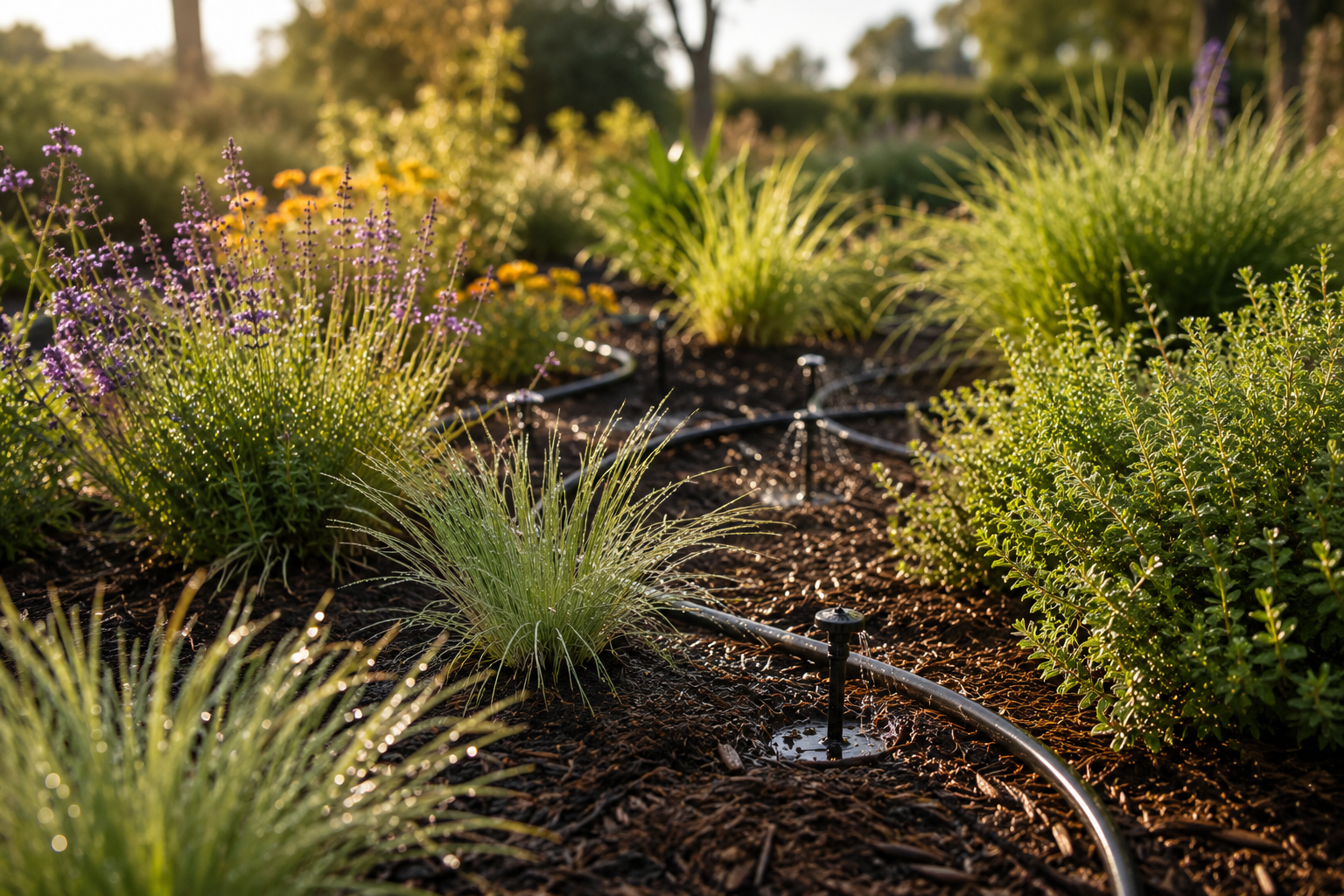
Resource conservation is undeniably one of the things to be considered for eco-friendly landscaping. With highly efficient drip irrigation systems and smart controllers, one can reduce water consumption by almost 50-70%.
Another thing to mention is rain gardens and bioswales that help filter stormwater, thereby reducing runoff and allowing groundwater replenishment. Also, impermeable hardscape materials allow water to seep into the ground, conserving water and preventing erosion.
Diverse landscapes attract pollinators, birds, and beneficial insects. Creating habitats by planting flowering shrubs and trees, such as hibiscus or magnolia, aids pollination. Nesting layers of vegetation benefit the ecosystem’s health.
The lighting design limits light pollution but, at the same time, provides safety. It further saves on energy through the installation of LED fixtures.
Through the use of durable materials and smart water management systems, beautiful landscapes are kept. Restoration processes respect natural structures that improve performance and eliminate maintenance during the wet season.
Sustainable landscaping fuses an ecological conscience with smart design, resulting in exquisite environments that are both beautiful and good. Instead, let’s raise the bar on efficiency, biodiversity, and aesthetics. This method helps us design gardens that are more resource-efficient and restorative to the natural ecosystem.
 Let the design be thoughtful with native plants. They thrive under local conditions and usually require less watering and fewer fertilizers.
Some examples are Gulf Coast muhly grass and Southern magnolia, both of which are low-maintenance plants in Louisiana.
It is easy to care for plants that are grouped according to their water and sunlight needs. Instead of mowing a huge lawn, think of using beautiful, drought-tolerant ground coverings like clover or creeping thyme.
Sustainability is much more than plant selection; for example, rain gardens and permeable pavers direct storm flows and protect waterways. Raised beds for growing vegetables, flowers, or herbs made from recycled materials contribute beauty as well.
Efficient watering systems, such as drip irrigation, save water since they drench the soil around plant roots, thereby controlling wetness through irrigation. Include composting zones to minimize waste and eliminate the need for chemical fertilizers.
This promotes the health of the garden. Install birdhouses and bee hotels for wildlife. Plant different flowers that can attract butterflies and hummingbirds. Ponds or birdbaths can provide a natural source of water for animals. Small patches of wild vegetation can provide refuge for some native species and would foster a balanced ecosystem.
Sustainable gardens can be beautiful, too. Planting windbreaks and shade can improve aesthetics while promoting energy efficiency. Edible landscaping, be it culinary herbs or shrubs that produce fruits, marries beauty with usefulness.
Paths of natural materials, such as decomposed granite or wood chips, add texture and improve permeability. Balancing these different aspects can create a garden that is both lovely and sustainable.
By using landscape features to improve energy efficiency, you can keep your property looking great while keeping energy usage down and doing your part for the environment.
Developing and incorporating energy-efficient landscape features will ultimately benefit the homeowner and our planet’s environment over the long term.
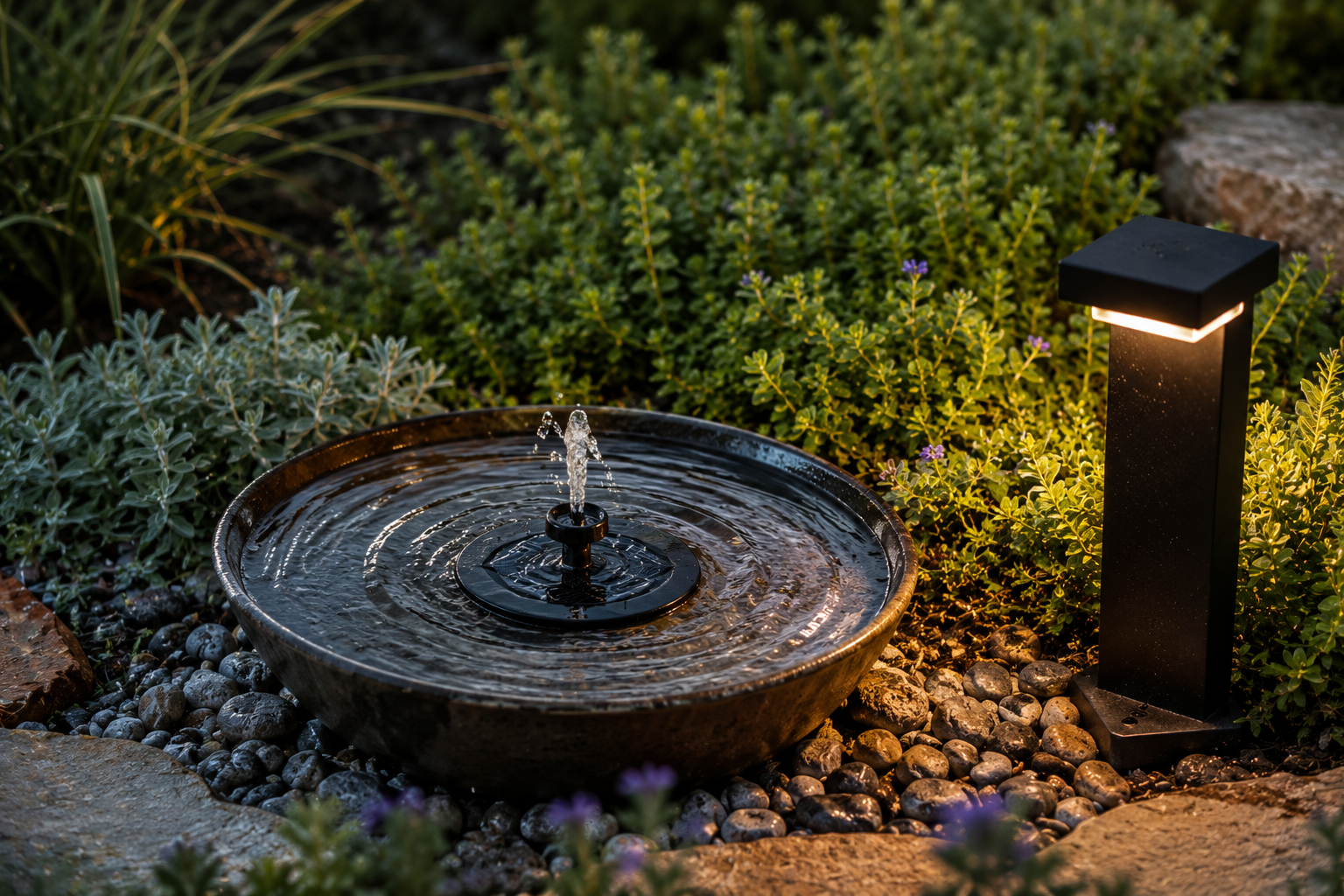 Make your surroundings a brilliant picture using environment-friendly elements, in addition to the general aspects of beautifying the landscape. Install solar-powered water features like fountains or ponds.
They adorn your yard with a certain nicety and save energy from electrical wiring, causing less electricity consumption because it works well in sunny areas.
Many are equipped with battery storage to ensure water flow even on cloudy days or at night. Place them near patios or gardens for maximum cooling in the summer.
An excellent means of saving energy inside is LED outdoor lighting. These can reduce electric consumption by up to 75% of conventional bulbs, offering a longer lifetime and savings in maintenance.
With pathway lights and wall-mounted LEDs, you can enjoy your landscape and reduce energy consumption. Warm LEDs offer a cozy atmosphere and have dimmable switches to set the mood perfectly.
The benefits of irrigation and lighting systems are maximized. Programming sprinklers, for example, waters early in the morning or during the night so that there would be less evaporation. Lighting controlled by a smartphone also allows for setting and adjusting brightness externally.
Green roofs are those roofs that are shrouded in vegetative systems. Those roofs keep cooling costs down during summer and also prevent the escape of heat during winter.
These roofs come with many benefits, such as improved air quality, opportunities to increase local biodiversity, and more ecological benefits, thus making them a very good component of every house.
Landscaping sustainably has many benefits apart from beautifying the landscape. It keeps water and energy use low in its healthy environment for you and your community. Grow native plants, use efficient irrigation systems, and choose permeable materials as combined measures to harmonize with nature.
Features like the rain garden and solar lighting can beautify a yard while conserving resources. We are in the business of designing custom, sustainable landscapes. Join us as we create a beautiful, green outdoor area for you today at Red Stick Construction. Contact us today!
Sustainable landscaping uses native, drought-tolerant plants, water-efficient irrigation, permeable materials, and energy-saving features to reduce environmental impact while keeping outdoor spaces beautiful and functional.
Drip irrigation systems paired with smart controllers can cut water consumption by roughly 50-70% compared to traditional sprinkler systems.
Gulf Coast muhly grass and Southern magnolia are both low-maintenance, native options well-suited to local conditions, requiring less watering and fewer fertilizers than non-native alternatives.
Hydrozoning means grouping plants based on their water needs. This makes irrigation more efficient since you’re not overwatering low-need plants or underwatering thirstier ones.
Rain gardens and bioswales filter stormwater runoff, reduce erosion, and help replenish groundwater by allowing water to soak into the soil rather than running off into storm drains.
Green roofs reduce cooling costs in summer and help retain heat in winter by adding a vegetative insulating layer, while also improving air quality and supporting local biodiversity.
LED lighting can reduce electricity consumption by up to 75% compared to conventional bulbs, while also lasting longer and requiring less maintenance.
Yes — many solar water features include battery storage, allowing them to keep running during cloudy weather or after dark.
Add birdhouses, bee hotels, native flowering plants, and small water sources like ponds or birdbaths. Leaving small patches of wild vegetation also gives native species a place to take refuge.
While some elements like permeable pavers or smart irrigation systems may have higher initial costs, they typically pay off through reduced water and energy bills, plus lower long-term maintenance needs.
RedStickConstruction
June 19, 2026
08-06-2026
If you’ve been thinking about refreshing your home, inside or out, 2026 is a great year to do it. Paint color trends have shifted dramatically, and the palette driving conversations right now is warmer, richer, and more rooted in nature than anything we’ve seen in the past decade. Whether you’re updating a single room, repainting your exterior, or planning a full renovation, knowing what’s trending helps you make choices that feel current and stand the test of time.
At Red Stick Construction, we work on homes all across the greater Baton Rouge area, and we’ve seen firsthand how the right color choice transforms a property. Here’s what’s hot in paint for 2026, and how to put it to work for your home.
For the better part of a decade, cool gray ruled interiors and exteriors alike. It was modern, clean, and safe. But in 2026, that era is officially wrapping up.
Homeowners and designers across the board have grown tired of spaces that feel clinical and impersonal. The feedback from clients has been consistent: gray rooms feel cold and flat. In their place, warm neutrals are taking center stage, taupes, sands, mushrooms, creamy whites, and earthy beiges that feel grounded and welcoming.
This doesn’t mean color is gone. It means the colors being chosen have depth and warmth rather than the cool, blue-tinted undertones that defined the gray trend.
This is a shift that works especially well for Louisiana homes. Our warm climate, outdoor materials, and lush greenery pair beautifully with nature-inspired palettes that lean toward warmth rather than cool minimalism.
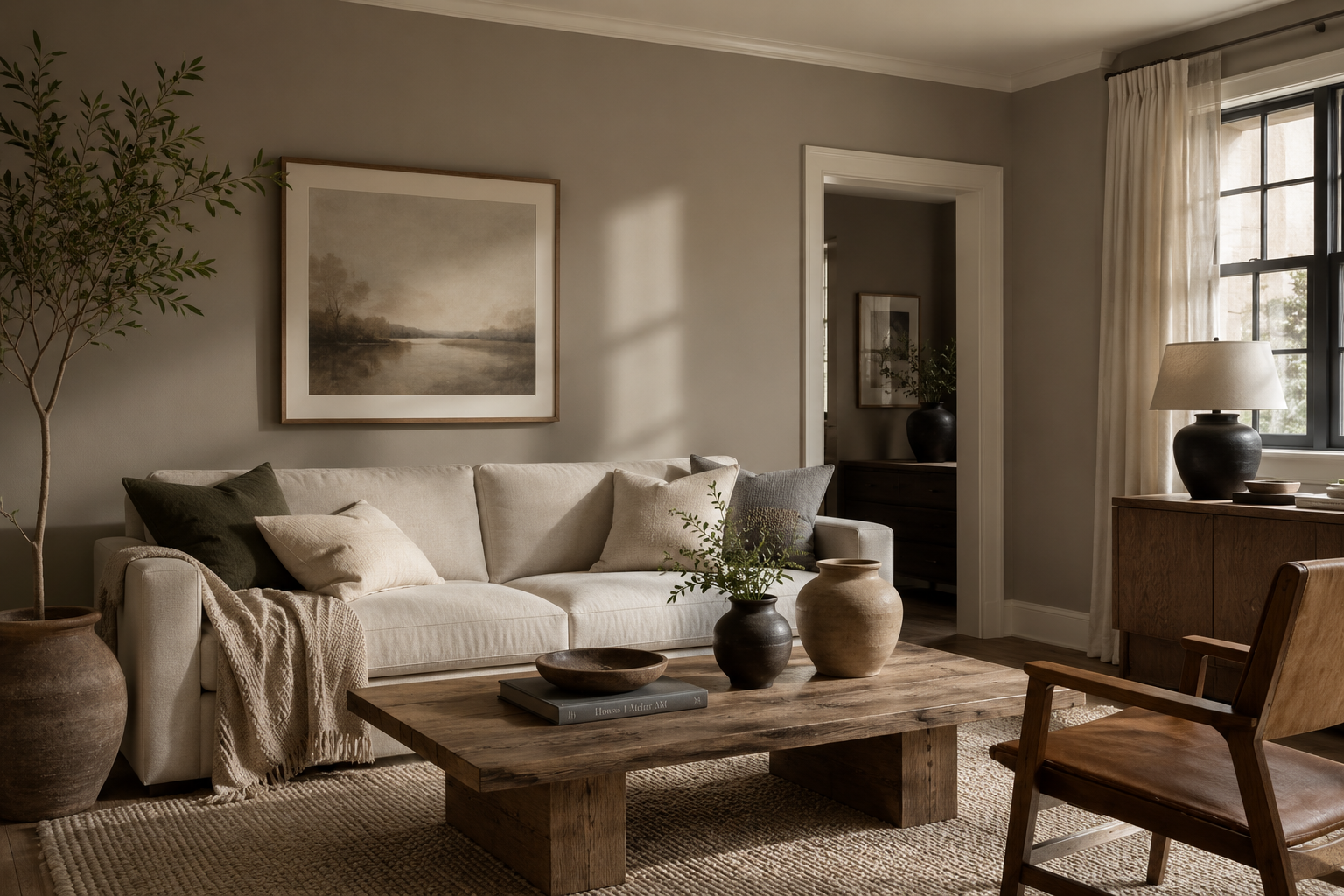 Creamy beiges, warm taupes, and soft mushroom tones are the dominant interior trend this year. These colors serve as versatile backdrops that let wood floors, stone countertops, and natural textiles shine without competing. In kitchens, living rooms, and bedrooms, they create a calm, settled feeling that designers describe as timeless, not trendy.
Sherwin-Williams’ Color of the Year for 2026, Universal Khaki, captures this direction perfectly: a warm, earthy neutral that works across rooms and adapts to both traditional and contemporary interiors.
Sage, olive, and dusty eucalyptus greens are having a significant moment in interiors this year. These muted, nature-inspired tones feel simultaneously sophisticated and calming, a combination that makes them work in living rooms, bedrooms, and even kitchens.
What makes earthy greens particularly relevant in South Louisiana is how they connect indoor spaces to the region’s lush outdoor environment. Paired with the right lighting and natural materials, a sage-painted room feels like a natural extension of what’s outside your windows.
Terracotta is not a full-room choice for most homeowners, but as an accent, it’s one of the strongest moves in 2026 interiors. Coral, persimmon, and warm clay tones add richness and a Mediterranean warmth that reads as expressive without being loud.
Designers recommend using terracotta strategically: a single wall in a study or entryway, painted furniture pieces, or architectural details like niches or built-in shelving. In Louisiana’s sun-soaked interior environments, these tones have a naturally comfortable quality that feels right at home.
Beyond the neutrals and earth tones, dusty jewel tones are showing up in more sophisticated interiors. Think smoky blue, chalky rose, dusty plum, and tobacco brown, colors that feel time-worn and lived-in rather than bright or saturated. These work especially well in rooms that benefit from richness and intimacy: home offices, dining rooms, libraries, and primary suites.
The key with dusty jewel tones is pairing them with the right finishes and materials. Linen textures, warm-toned wood, vintage-style hardware, and layered lighting amplify their depth and prevent them from reading as flat or heavy.
The same warmth that’s defining interior palettes is shaping exterior choices this year. Creamy whites are replacing stark white exteriors. Warm charcoals and deep taupes are preferred over cooler blue-based grays. Homeowners and industry professionals alike are drawn to palettes that feel connected to their natural surroundings rather than in competition with them.
For Baton Rouge and the surrounding communities, where brick, mature trees, and lush landscaping are common, this is a trend that fits naturally. Warm neutrals read cohesively against our regional architecture and environment in a way that cool palettes often don’t.
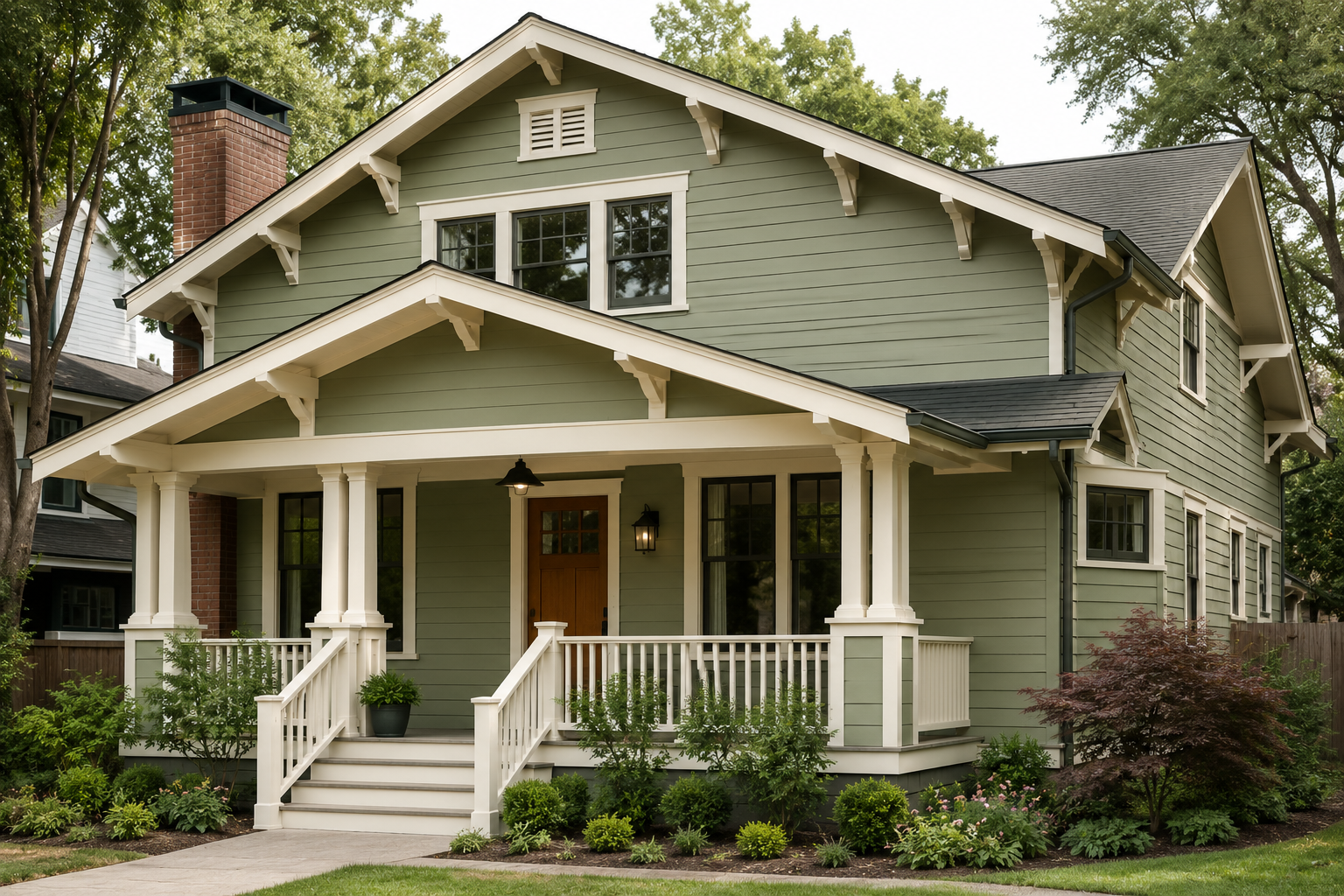
Earthy green is arguably the single most dominant exterior color trend of 2026. Sage, muted olive, and soft mossy greens are being applied to everything from craftsman cottages to contemporary builds, and for good reason. They harmonize with landscaping, feel grounded and authentic, and have a quality that reads as timeless rather than trendy.
For Louisiana homeowners, this trend works particularly well. Our native plantings, moss-covered oaks, and subtropical greenery provide a natural backdrop that makes sage and olive exteriors feel intentional and well-considered rather than random.
The popular choices this year include Behr’s Hidden Gem, Valspar’s Warm Eucalyptus, and muted sage tones that perform well in high-humidity climates like ours when paired with quality exterior paint products. If your home is being repainted or refinished as part of a broader renovation, these greens are worth serious consideration.
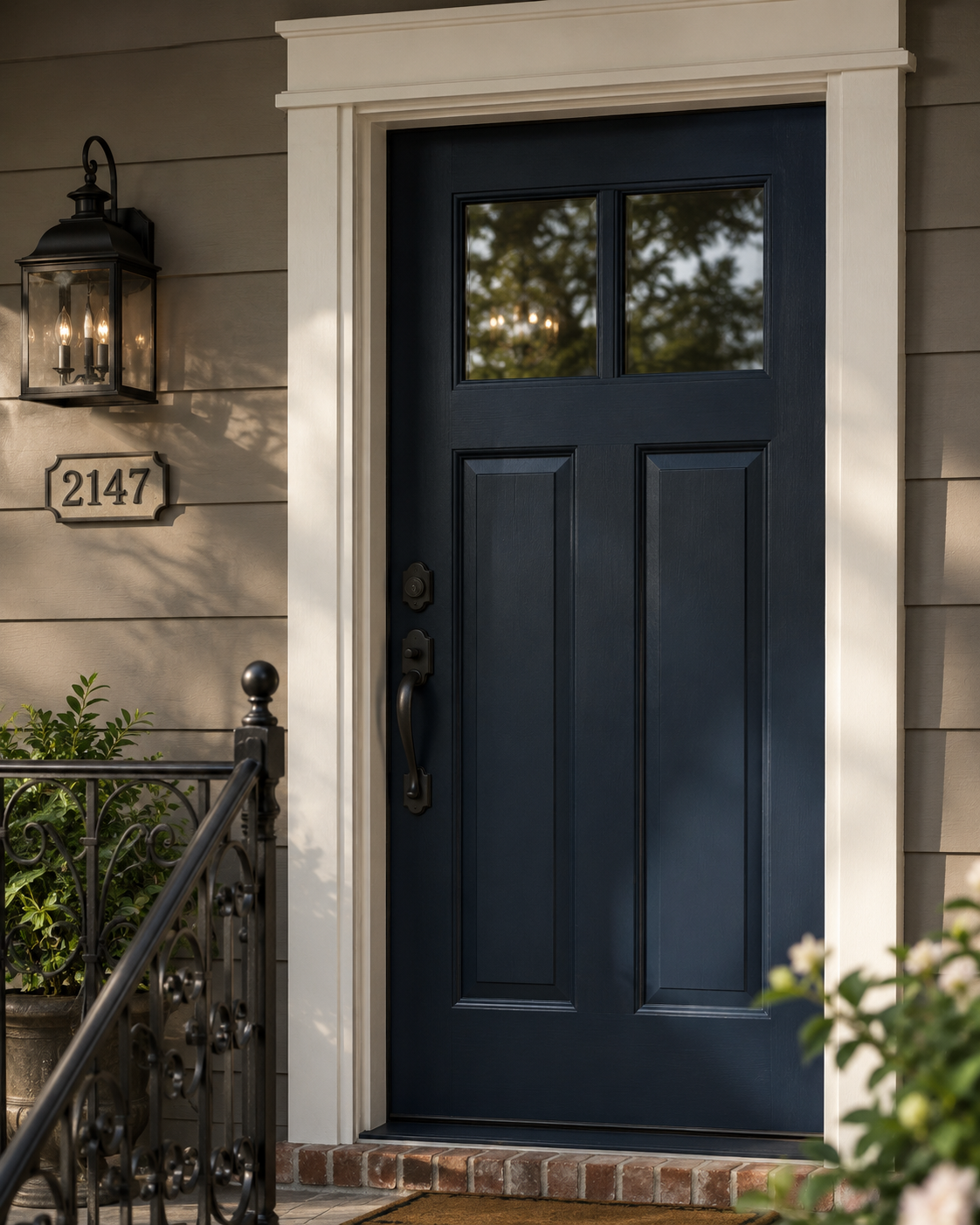
While main body colors are leaning warm and subtle, deep accent tones are being used strategically to add architectural interest. Front doors, window trim, shutters, and decorative elements are seeing a rise in:
For homes with iron works features like decorative gates, railings, or fencing, a deep charcoal or matte black finish pairs beautifully with the warm neutral and earthy green exterior palette trending this year.
Soft, dusty blues are gaining traction as exterior accent colors, particularly for coastal-influenced homes, Cape Cods, and properties that want a calm, polished look. These aren’t bold or bright; they’re muted and sophisticated, sitting comfortably alongside cream or warm gray body colors.
In the broader Gulf South region, a soft blue exterior references the water and sky in a way that feels appropriate and rooted in the local environment. Paired with crisp trim and dark hardware, it reads as fresh without being loud.
Knowing what’s trending is just the starting point. Choosing the right color for your specific property takes a bit more consideration.
Before you select any paint color, look at what’s already there and can’t easily be changed. Your roof material, brick or stone facing, concrete work, hardscape elements, and existing landscaping all provide natural cues for color direction. A home with warm red brick reads very differently under a sage exterior versus a cool gray one.
This is especially true for homes in the Baton Rouge area, where brick is a common architectural material. Warm neutrals, earthy greens, and creamy whites tend to harmonize with brick in a way that cool tones often don’t. If your home features concrete flatwork around the foundation, driveway, or porch, consider how the gray tones of the concrete will interact with your chosen exterior palette.
Paint performance in South Louisiana requires products specifically formulated for high humidity, UV exposure, and temperature variation. This isn’t just about color choice, it’s about the paint itself.
A color that looks beautiful in a test sample can shift or fade quickly if the product isn’t rated for our climate. Mold and mildew resistance is a genuine functional requirement here, not an optional upgrade. Eco-friendly, low-VOC paint products have caught up significantly in performance and are a strong choice for Louisiana homes.
The strongest color choices are ones that complement the home’s architectural DNA rather than fighting against it. Traditional homes, including the Colonial and Creole-influenced styles common across the Baton Rouge area, tend to look best with classic palettes: warm neutrals, sage and olive greens, or creamy whites with contrasting trim. More contemporary or modern builds have more flexibility with bolder accent colors or monochromatic exterior approaches.
If your exterior renovation is part of a broader project that includes fence installation, iron works, or changes to your home’s outdoor spaces and landscaping, plan your color choices holistically. A cohesive palette across all exterior elements creates a finished, intentional look that individual color decisions made in isolation rarely achieve.
The 2026 paint color moment is ultimately about warmth, authenticity, and a return to colors that feel rooted in the natural world. Whether you’re painting a single room or planning a full exterior refresh, the direction is clear: lean warm, go earthy, and choose depth over flatness.
For homeowners across Baton Rouge, Metairie, Mandeville, Covington, New Orleans, and the surrounding communities, this is a trend direction that works naturally with our regional architecture, climate, and landscape. The warm neutrals and earthy greens trending nationally are especially well-suited to South Louisiana’s built environment.
At Red Stick Construction, we handle renovation and exterior projects across the region, and we’re happy to walk you through how color choices integrate with your broader project plans. Reach out to our team for a free estimate and consultation.
Earthy sage green is widely considered the dominant exterior color trend of 2026. Alongside it, warm neutrals, greige, khaki, creamy white, and mushroom, are replacing the cool grays that dominated the past decade. Sherwin-Williams Universal Khaki (SW 6150), named the brand’s 2026 Color of the Year, reflects this direction well.
Cool, blue-toned grays are losing popularity significantly this year. Warmer variations, grays with brown, taupe, or mushroom undertones, are a better choice if you prefer a neutral exterior. These greige tones feel more contemporary and inviting than the cooler grays that were popular through the 2010s and early 2020s.
Warm neutrals pair naturally with earthy greens (sage, olive, eucalyptus), terracotta accents, dusty jewel tones (smoky blue, chalky rose), and rich wood tones. Natural materials like linen, rattan, stone, and ceramic amplify the grounded quality of these palettes.
Beyond color choice, focus on paint quality and formulation. In Louisiana’s climate, look for exterior paints rated for high humidity and UV resistance, with built-in mold and mildew inhibitors. Have a qualified contractor assess your current exterior’s condition before painting, surface preparation is as important as product selection for long-lasting results.