


If you’ve been thinking about refreshing your home, inside or out, 2026 is a great year to do it. Paint color trends have shifted dramatically, and the palette driving conversations right now is warmer, richer, and more rooted in nature than anything we’ve seen in the past decade. Whether you’re updating a single room, repainting your exterior, or planning a full renovation, knowing what’s trending helps you make choices that feel current and stand the test of time.
At Red Stick Construction, we work on homes all across the greater Baton Rouge area, and we’ve seen firsthand how the right color choice transforms a property. Here’s what’s hot in paint for 2026, and how to put it to work for your home.
For the better part of a decade, cool gray ruled interiors and exteriors alike. It was modern, clean, and safe. But in 2026, that era is officially wrapping up.
Homeowners and designers across the board have grown tired of spaces that feel clinical and impersonal. The feedback from clients has been consistent: gray rooms feel cold and flat. In their place, warm neutrals are taking center stage, taupes, sands, mushrooms, creamy whites, and earthy beiges that feel grounded and welcoming.
This doesn’t mean color is gone. It means the colors being chosen have depth and warmth rather than the cool, blue-tinted undertones that defined the gray trend.
This is a shift that works especially well for Louisiana homes. Our warm climate, outdoor materials, and lush greenery pair beautifully with nature-inspired palettes that lean toward warmth rather than cool minimalism.
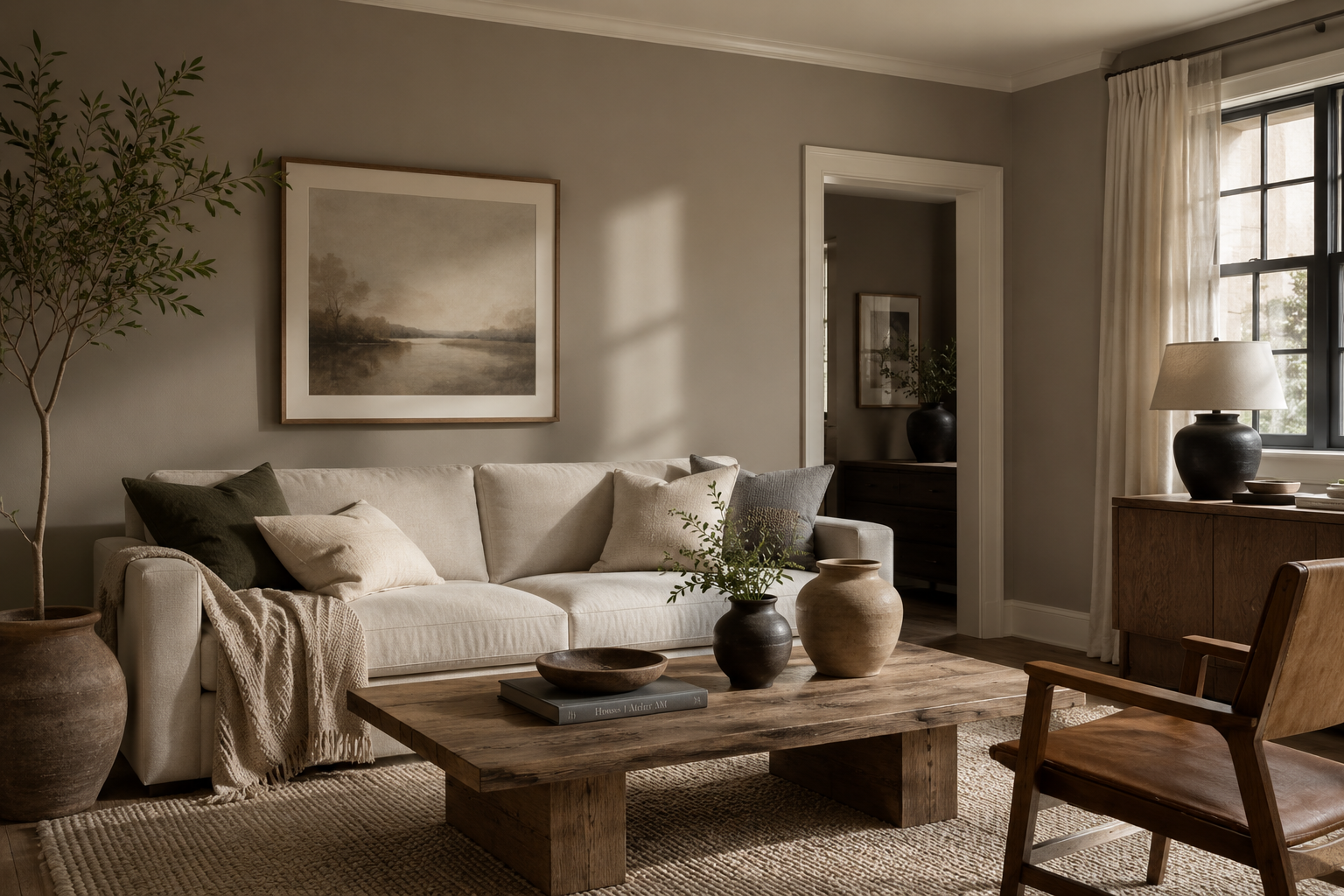 Creamy beiges, warm taupes, and soft mushroom tones are the dominant interior trend this year. These colors serve as versatile backdrops that let wood floors, stone countertops, and natural textiles shine without competing. In kitchens, living rooms, and bedrooms, they create a calm, settled feeling that designers describe as timeless, not trendy.
Sherwin-Williams’ Color of the Year for 2026, Universal Khaki, captures this direction perfectly: a warm, earthy neutral that works across rooms and adapts to both traditional and contemporary interiors.
Sage, olive, and dusty eucalyptus greens are having a significant moment in interiors this year. These muted, nature-inspired tones feel simultaneously sophisticated and calming, a combination that makes them work in living rooms, bedrooms, and even kitchens.
What makes earthy greens particularly relevant in South Louisiana is how they connect indoor spaces to the region’s lush outdoor environment. Paired with the right lighting and natural materials, a sage-painted room feels like a natural extension of what’s outside your windows.
Terracotta is not a full-room choice for most homeowners, but as an accent, it’s one of the strongest moves in 2026 interiors. Coral, persimmon, and warm clay tones add richness and a Mediterranean warmth that reads as expressive without being loud.
Designers recommend using terracotta strategically: a single wall in a study or entryway, painted furniture pieces, or architectural details like niches or built-in shelving. In Louisiana’s sun-soaked interior environments, these tones have a naturally comfortable quality that feels right at home.
Beyond the neutrals and earth tones, dusty jewel tones are showing up in more sophisticated interiors. Think smoky blue, chalky rose, dusty plum, and tobacco brown, colors that feel time-worn and lived-in rather than bright or saturated. These work especially well in rooms that benefit from richness and intimacy: home offices, dining rooms, libraries, and primary suites.
The key with dusty jewel tones is pairing them with the right finishes and materials. Linen textures, warm-toned wood, vintage-style hardware, and layered lighting amplify their depth and prevent them from reading as flat or heavy.
The same warmth that’s defining interior palettes is shaping exterior choices this year. Creamy whites are replacing stark white exteriors. Warm charcoals and deep taupes are preferred over cooler blue-based grays. Homeowners and industry professionals alike are drawn to palettes that feel connected to their natural surroundings rather than in competition with them.
For Baton Rouge and the surrounding communities, where brick, mature trees, and lush landscaping are common, this is a trend that fits naturally. Warm neutrals read cohesively against our regional architecture and environment in a way that cool palettes often don’t.
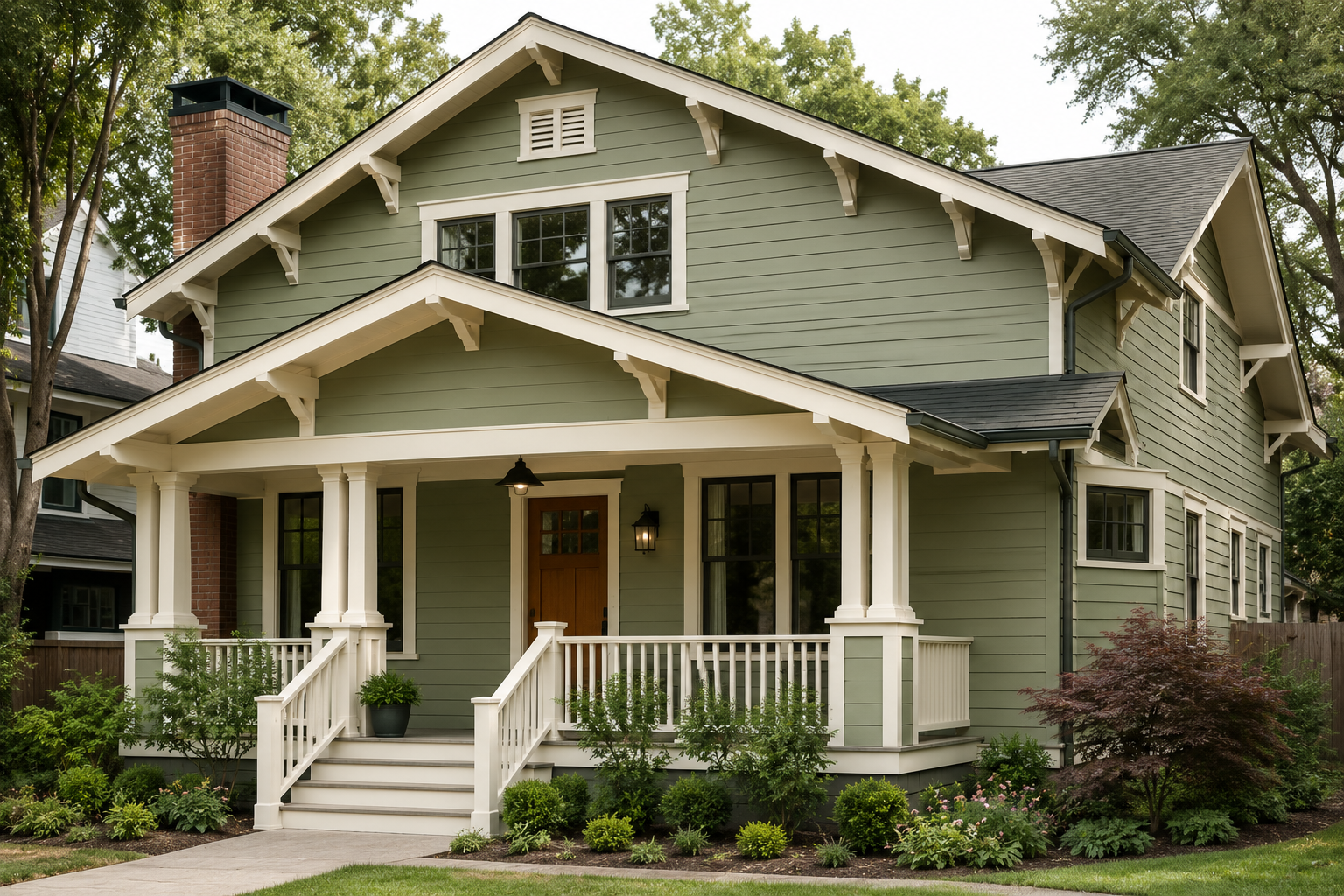
Earthy green is arguably the single most dominant exterior color trend of 2026. Sage, muted olive, and soft mossy greens are being applied to everything from craftsman cottages to contemporary builds, and for good reason. They harmonize with landscaping, feel grounded and authentic, and have a quality that reads as timeless rather than trendy.
For Louisiana homeowners, this trend works particularly well. Our native plantings, moss-covered oaks, and subtropical greenery provide a natural backdrop that makes sage and olive exteriors feel intentional and well-considered rather than random.
The popular choices this year include Behr’s Hidden Gem, Valspar’s Warm Eucalyptus, and muted sage tones that perform well in high-humidity climates like ours when paired with quality exterior paint products. If your home is being repainted or refinished as part of a broader renovation, these greens are worth serious consideration.
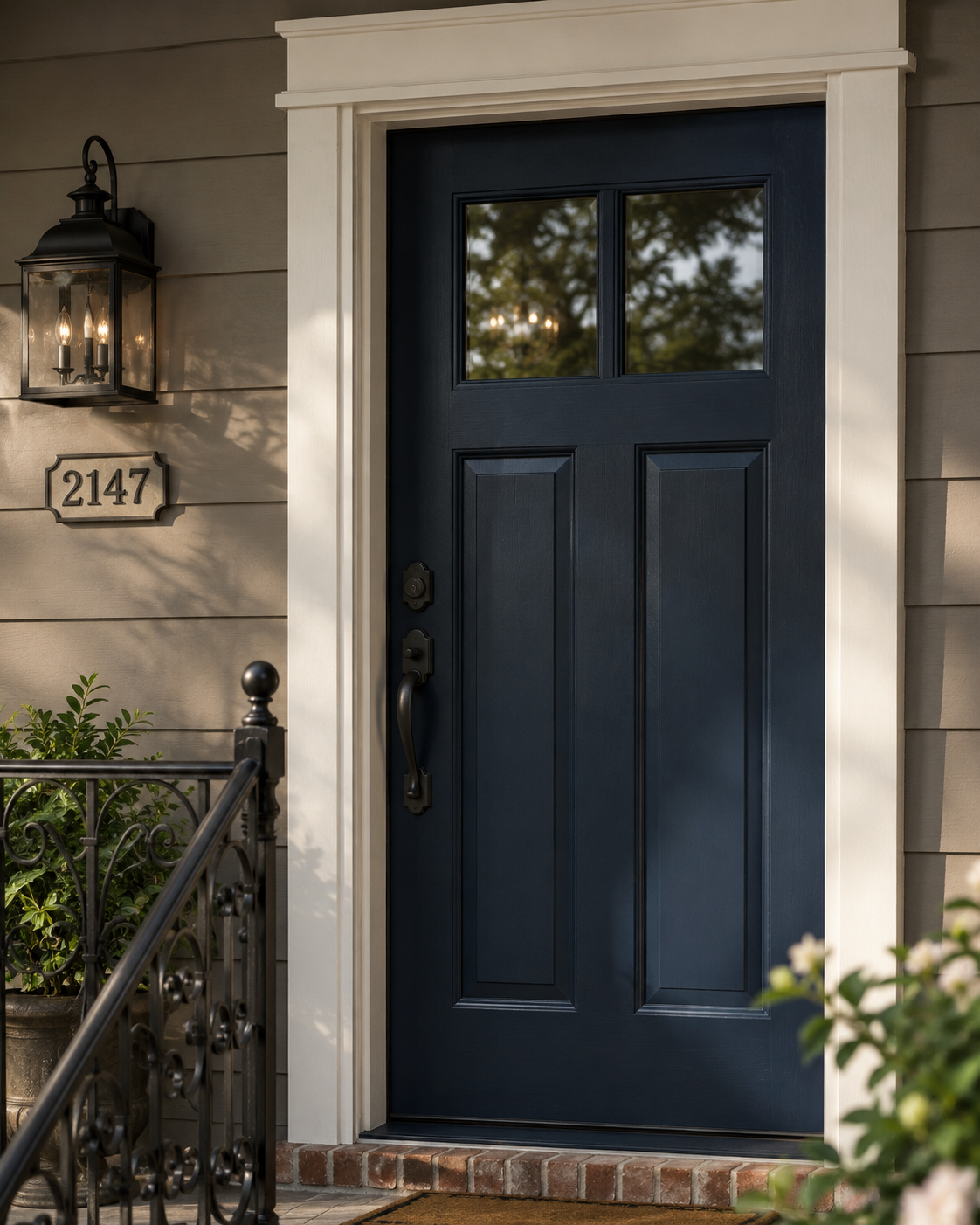
While main body colors are leaning warm and subtle, deep accent tones are being used strategically to add architectural interest. Front doors, window trim, shutters, and decorative elements are seeing a rise in:
For homes with iron works features like decorative gates, railings, or fencing, a deep charcoal or matte black finish pairs beautifully with the warm neutral and earthy green exterior palette trending this year.
Soft, dusty blues are gaining traction as exterior accent colors, particularly for coastal-influenced homes, Cape Cods, and properties that want a calm, polished look. These aren’t bold or bright; they’re muted and sophisticated, sitting comfortably alongside cream or warm gray body colors.
In the broader Gulf South region, a soft blue exterior references the water and sky in a way that feels appropriate and rooted in the local environment. Paired with crisp trim and dark hardware, it reads as fresh without being loud.
Knowing what’s trending is just the starting point. Choosing the right color for your specific property takes a bit more consideration.
Before you select any paint color, look at what’s already there and can’t easily be changed. Your roof material, brick or stone facing, concrete work, hardscape elements, and existing landscaping all provide natural cues for color direction. A home with warm red brick reads very differently under a sage exterior versus a cool gray one.
This is especially true for homes in the Baton Rouge area, where brick is a common architectural material. Warm neutrals, earthy greens, and creamy whites tend to harmonize with brick in a way that cool tones often don’t. If your home features concrete flatwork around the foundation, driveway, or porch, consider how the gray tones of the concrete will interact with your chosen exterior palette.
Paint performance in South Louisiana requires products specifically formulated for high humidity, UV exposure, and temperature variation. This isn’t just about color choice, it’s about the paint itself.
A color that looks beautiful in a test sample can shift or fade quickly if the product isn’t rated for our climate. Mold and mildew resistance is a genuine functional requirement here, not an optional upgrade. Eco-friendly, low-VOC paint products have caught up significantly in performance and are a strong choice for Louisiana homes.
The strongest color choices are ones that complement the home’s architectural DNA rather than fighting against it. Traditional homes, including the Colonial and Creole-influenced styles common across the Baton Rouge area, tend to look best with classic palettes: warm neutrals, sage and olive greens, or creamy whites with contrasting trim. More contemporary or modern builds have more flexibility with bolder accent colors or monochromatic exterior approaches.
If your exterior renovation is part of a broader project that includes fence installation, iron works, or changes to your home’s outdoor spaces and landscaping, plan your color choices holistically. A cohesive palette across all exterior elements creates a finished, intentional look that individual color decisions made in isolation rarely achieve.
The 2026 paint color moment is ultimately about warmth, authenticity, and a return to colors that feel rooted in the natural world. Whether you’re painting a single room or planning a full exterior refresh, the direction is clear: lean warm, go earthy, and choose depth over flatness.
For homeowners across Baton Rouge, Metairie, Mandeville, Covington, New Orleans, and the surrounding communities, this is a trend direction that works naturally with our regional architecture, climate, and landscape. The warm neutrals and earthy greens trending nationally are especially well-suited to South Louisiana’s built environment.
At Red Stick Construction, we handle renovation and exterior projects across the region, and we’re happy to walk you through how color choices integrate with your broader project plans. Reach out to our team for a free estimate and consultation.
Earthy sage green is widely considered the dominant exterior color trend of 2026. Alongside it, warm neutrals, greige, khaki, creamy white, and mushroom, are replacing the cool grays that dominated the past decade. Sherwin-Williams Universal Khaki (SW 6150), named the brand’s 2026 Color of the Year, reflects this direction well.
Cool, blue-toned grays are losing popularity significantly this year. Warmer variations, grays with brown, taupe, or mushroom undertones, are a better choice if you prefer a neutral exterior. These greige tones feel more contemporary and inviting than the cooler grays that were popular through the 2010s and early 2020s.
Warm neutrals pair naturally with earthy greens (sage, olive, eucalyptus), terracotta accents, dusty jewel tones (smoky blue, chalky rose), and rich wood tones. Natural materials like linen, rattan, stone, and ceramic amplify the grounded quality of these palettes.
Beyond color choice, focus on paint quality and formulation. In Louisiana’s climate, look for exterior paints rated for high humidity and UV resistance, with built-in mold and mildew inhibitors. Have a qualified contractor assess your current exterior’s condition before painting, surface preparation is as important as product selection for long-lasting results.