


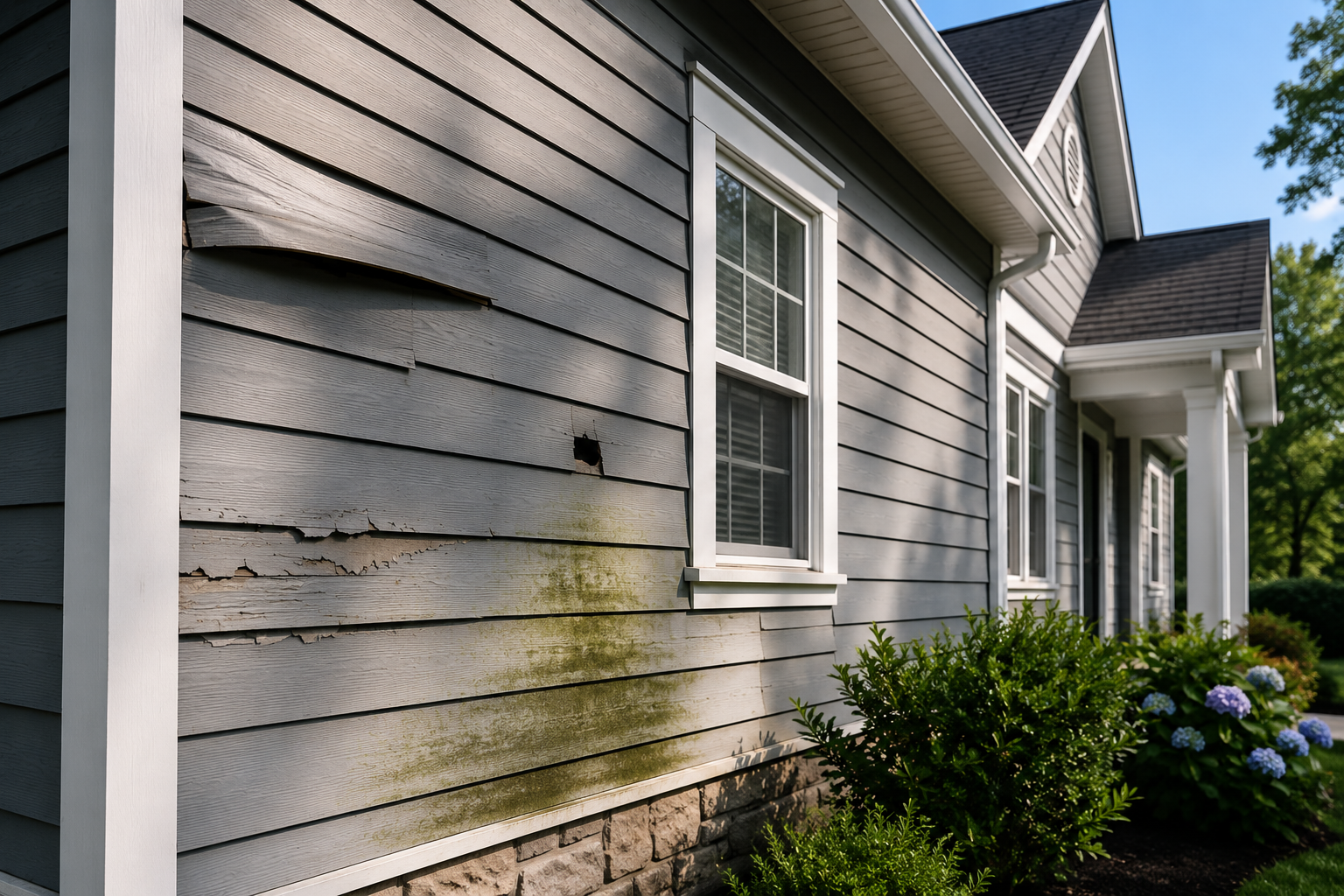
Your home’s siding does more than make it look good; it’s the first line of defense against Louisiana’s heat, humidity, and storm season. When siding starts to fail, the damage rarely announces itself loudly. Instead, it creeps in quietly through small cracks, subtle warps, and fading patches that are easy to overlook until the problem becomes expensive.
For homeowners across Baton Rouge and the surrounding areas, knowing what to look for early can save thousands of dollars in structural repairs down the road. This guide walks you through the most common warning signs of siding damage, what causes them, and what to do when you spot them.
Louisiana’s climate is brutal on exterior building materials. The combination of intense summer heat, high humidity, heavy rainfall, and seasonal storms creates conditions that accelerate wear on virtually every type of siding, wood, vinyl, fiber cement, and beyond.
In Baton Rouge and surrounding communities, many homeowners go months or even years without closely inspecting their siding. Life gets busy, and the exterior of the house becomes background noise until a leak appears inside or a neighbor points something out. By then, the damage has often spread well beyond its starting point.
The key to avoiding that scenario is conducting simple visual inspections at least twice a year, ideally after hurricane season ends and again in early spring before temperatures climb. A few minutes of attention to the right areas can catch problems while they’re still cheap to fix.
The earlier you catch siding problems, the simpler and less expensive the fix. Here are the most common signs that your siding needs attention before small issues turn into major structural damage.
 Siding that no longer lies flat against your home is a red flag. Warped or buckled panels often indicate that moisture is getting trapped behind the siding, causing the material to expand unevenly. This is especially common with older vinyl siding that’s lost its flexibility and with wood siding that hasn’t been properly sealed.
What to look for: Stand back from your home and scan each wall. If panels look uneven, wavy, or pulling away from the surface, those areas need a closer inspection. Run your hand along the panels’ movement or softness beneath, which suggests moisture infiltration.
Physical damage to siding creates entry points for water, insects, and air. Even small cracks matter. In Louisiana’s climate, a hairline crack in the spring can become a wide gap by fall once heat expansion and storm-driven rain have worked on it.
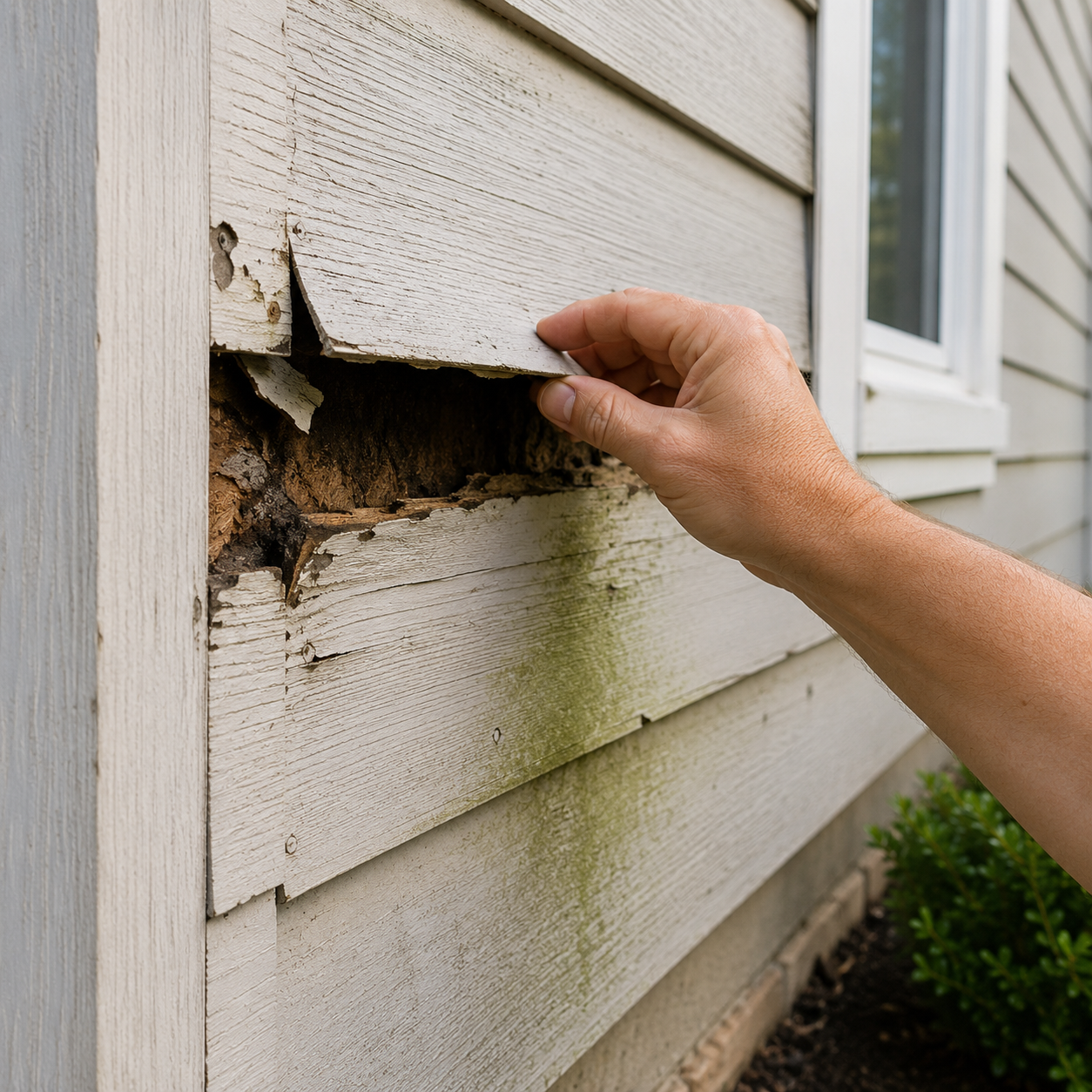
If you find cracks, probe the surrounding area with a screwdriver. If the material feels soft or gives way, moisture has likely penetrated the substrate beneath, which will require more than a surface patch.
Some degree of fading is normal over time, but uneven discoloration or dark staining is a warning sign worth investigating. Brown or black streaks typically indicate mold, mildew, or algae growth, all of which signal that moisture is present either on the surface or behind it.
Discoloration alone doesn’t confirm damage, but it’s always worth investigating further rather than assuming it’s cosmetic.
If your siding is painted, keep an eye on the condition of that paint. Peeling, bubbling, or blistering paint is often the first visible symptom of moisture trapped beneath the surface. Paint lifts when water vapor pushes outward from within the wall assembly, and in Louisiana’s humid climate, this can happen surprisingly quickly once a breach forms.
This is particularly important to watch for on older wood-sided homes, where the siding itself can absorb and hold moisture long before the paint gives way completely.
This warning sign requires getting up close. Walk around your home and press firmly on siding panels near the base of walls, around windows, and anywhere you’ve noticed staining or discoloration. Healthy siding should feel firm and solid. Soft, spongy, or compressible areas almost always indicate rot or moisture damage in the material or the sheathing underneath.
Siding serves as part of your home’s thermal envelope. When it fails, particularly when moisture compromises insulation beneath it, or air gaps form at damaged seams, your HVAC system has to work harder to maintain indoor temperatures.
A noticeable uptick in energy costs, especially during peak summer months in Baton Rouge, can sometimes be traced back to compromised siding rather than equipment issues. While this isn’t a visual warning sign, it’s worth paying attention to as a supporting clue when other small signs are present.
Siding panels connect at joints, corners, and trim pieces throughout your home’s exterior. Over time, caulking dries out and shrinks, fasteners work loose, and panels shift. Any visible gap is a potential entry point for water. In hurricane-prone southern Louisiana, gaps that seem minor under normal conditions can allow significant moisture intrusion during driving rain.
Understanding what’s behind siding failure helps you prevent it and make smarter decisions when it’s time to repair or replace. Most siding problems in Baton Rouge and south Louisiana trace back to a handful of root causes.
Hurricane season is the obvious culprit, but it’s not the only one. Even typical summer thunderstorms deliver wind-driven rain that forces water into microscopic gaps. Over the years, the cumulative effect of this moisture exposure weakens caulking, warps panels, and compromises the seal at every joint and transition point.
Siding that wasn’t installed with proper flashing, adequate overlap, or correct fastener placement will fail before its time. This is especially true in older homes built before current best practices for moisture management were standard. Improper installation around windows and doors is one of the most common pathways for water to enter wall cavities undetected.
Termites and carpenter ants are active throughout the year in Louisiana. Both can cause significant structural damage to wood-based siding, sometimes working from the inside out before any exterior sign is visible. If you tap on siding and hear a hollow sound in areas that were previously solid, pest activity may be the cause.
Not every sign of siding damage requires a full replacement, but all of them require honest assessment. Here’s how to approach it.
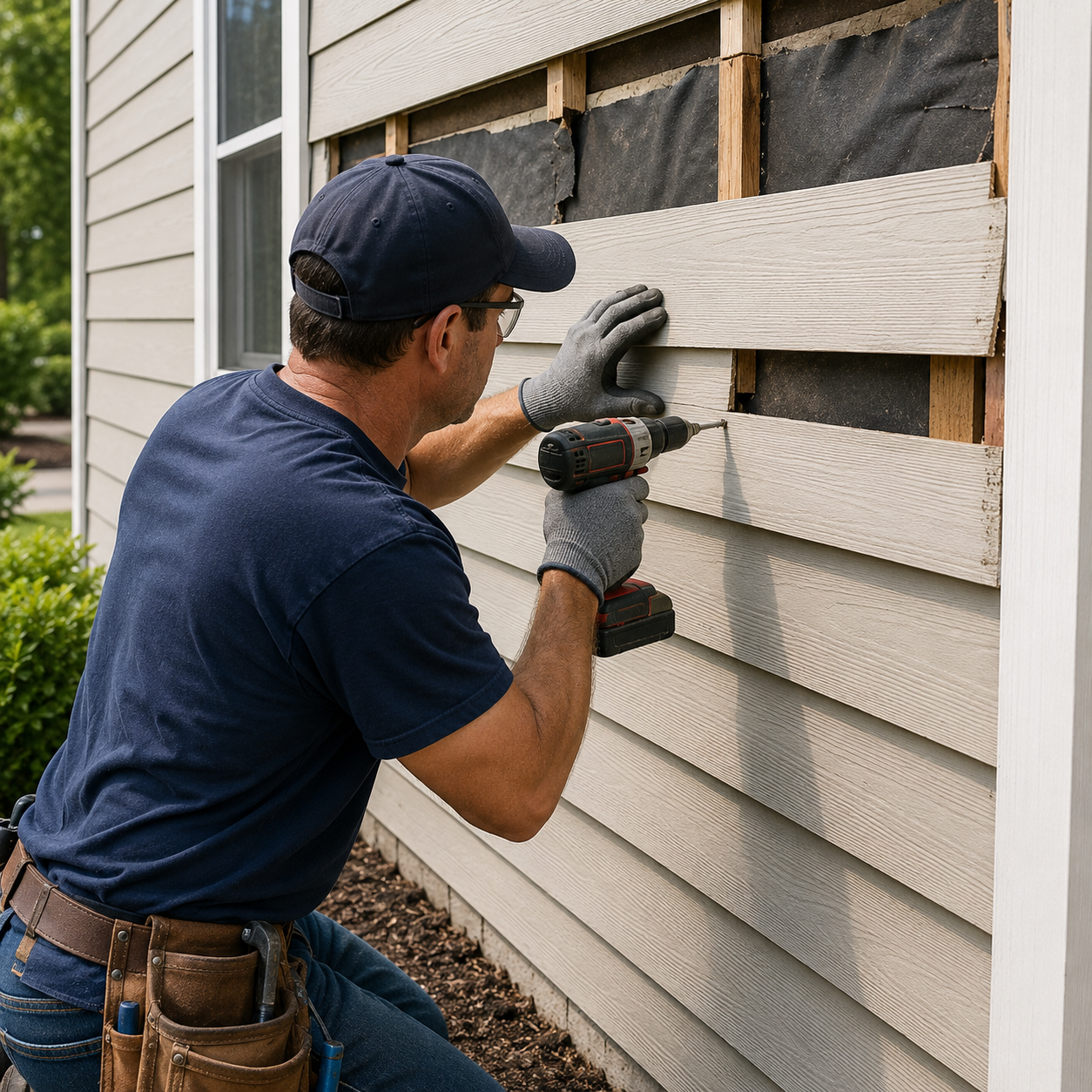 Minor surface cracks or small chips: Depending on the material, these may be patchable with the right filler or caulk. Always treat the surface afterward with a primer and sealant to prevent moisture entry.
Getting a professional assessment early prevents guesswork and helps you understand the real scope of the problem before costs escalate.
Red Stick Construction provides free estimates across the Greater Baton Rouge area and has worked on homes throughout Baton Rouge, Covington, Mandeville, Metairie, New Orleans, and beyond. Our team brings direct experience with Louisiana’s specific climate challenges to every exterior project.
Beyond siding, homeowners often discover that exterior damage extends to other systems. A compromised roof can drive water behind siding panels, making roofing an important part of the full picture. Similarly, damaged exterior areas sometimes call for demolition of deteriorated sections before sound reconstruction can take place.
For homes needing broader exterior upgrades, our fencing and iron works services can complement a restored exterior with clean, durable boundary features.
And when hardscape areas around the home’s perimeter are contributing to drainage problems that affect siding, our concrete services can address grading and surface water issues at the foundation level.
Acting on early warning signs rather than waiting for obvious failure delivers measurable advantages for homeowners in the Greater Baton Rouge area.
If you’ve noticed any of the warning signs described here or if it’s simply been a while since you’ve had a close look at your exterior, now is a good time to take action.
Red Stick Construction offers free estimates and serves homeowners across South Louisiana. Reach out to our team to schedule a walk-through and get a clear picture of where your home stands.
Twice a year is a reasonable baseline, once after hurricane season (late fall) and once in early spring before the heat and storm season ramps up again. After any significant weather event, a quick visual walkthrough is also worth doing to catch new damage while it’s fresh.
Minor cosmetic issues like small cracks or isolated caulk failure can sometimes be handled as a DIY project if you’re comfortable working on ladders and have the right materials. However, any damage involving soft material, rot, persistent moisture, or structural concerns beneath the siding warrants professional assessment. Misidentifying the scope of the damage is the most common reason DIY siding repairs fail.
Coverage depends on the cause. Sudden storm or impact damage is typically covered by standard homeowners’ policies. Gradual deterioration from age or lack of maintenance usually is not. After any storm event, document siding damage with photos before making repairs, and contact your insurance provider before starting work.
Fiber cement and high-quality vinyl siding are both well-suited to Louisiana’s combination of heat, humidity, and storm exposure. Fiber cement is particularly resistant to moisture, pests, and fire. Wood siding can perform well when properly sealed and maintained, but requires more consistent upkeep in this climate than in drier regions.