


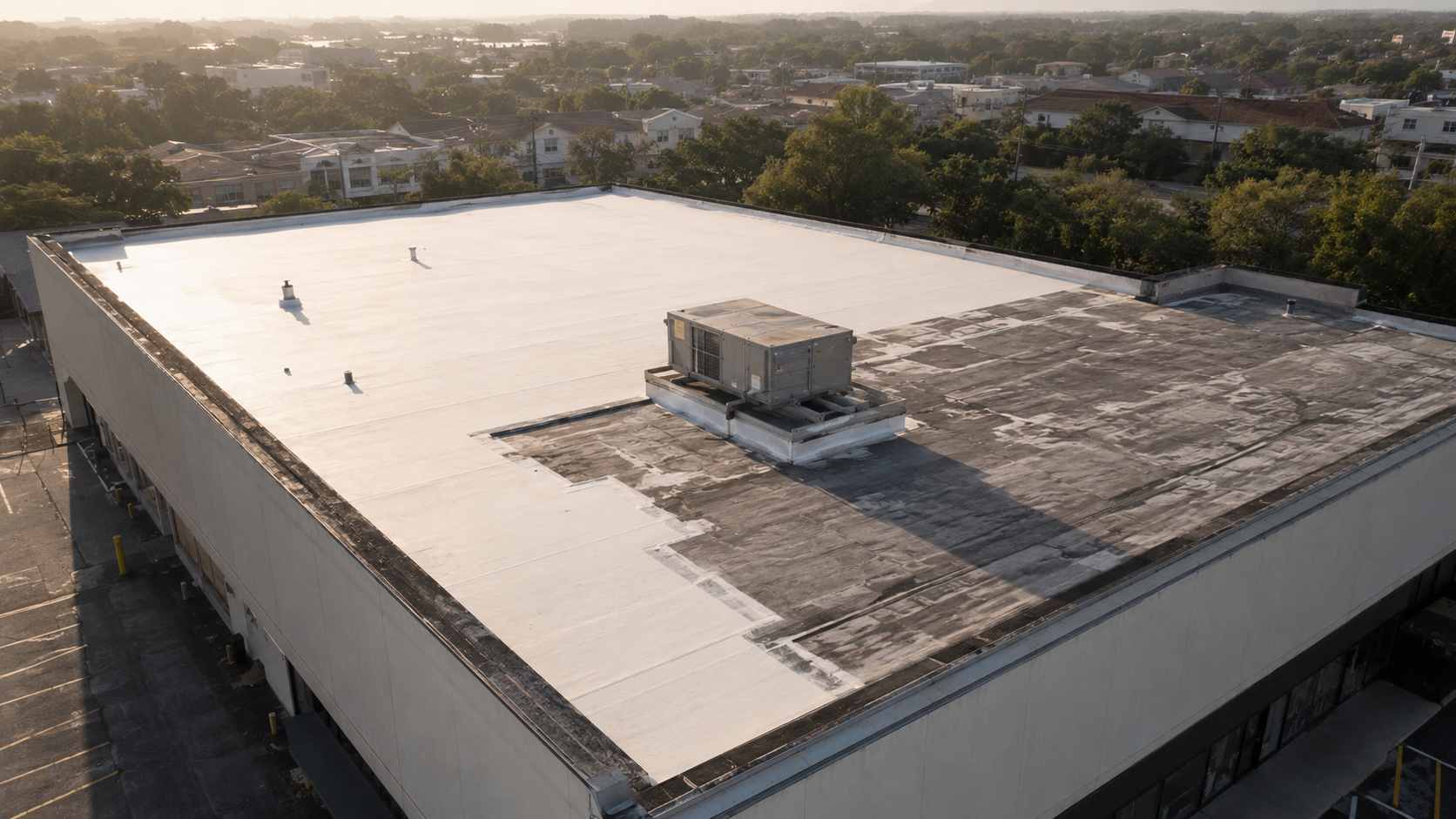
Roughly 80% of commercial buildings will experience a roof leak at some point in their lifespan, and in many cases, the underlying cause traces back to maintenance that simply didn’t happen. For Baton Rouge property owners, that statistic carries extra weight.
Between intense summer heat, near-constant humidity, and a hurricane season that runs from June through November, commercial roofs in our area take on more stress than almost anywhere else in the country.
A small leak or a handful of missing membrane fasteners might not seem urgent today. Left unaddressed through one more storm season, that same issue can spread into decking, insulation, and interior finishes, turning a routine repair into a five-figure replacement.
This guide walks through why regular roof maintenance matters, what to watch for, and how a proactive plan protects both your building and your bottom line.
Louisiana’s climate is uniquely hard on flat and low-slope commercial roofing systems. Heat radiating off a TPO or modified bitumen membrane all summer, paired with sudden afternoon downpours, creates a cycle of expansion and contraction that wears down seams and flashing faster than in drier, cooler regions. Add in wind-driven rain from tropical systems, and even a well-installed roof can develop vulnerabilities within just a few years.
Many Baton Rouge property managers go months between close inspections simply because nothing is visibly wrong from inside the building. By the time a tenant reports a ceiling stain, water has often already reached the insulation and structural decking. Routine maintenance closes that gap by catching problems while they’re still small and inexpensive to fix.
Roof maintenance tends to fall to the bottom of a facility manager’s list because the consequences aren’t immediate. There’s no daily reminder that a roof needs attention, unlike a broken HVAC unit or a parking lot pothole. That invisibility is exactly what makes neglect so costly over time.
Small, fixable issues, missing flashing, a clogged drain, and a section of granule loss don’t announce themselves loudly. They sit quietly until a storm pushes water through the weak point, and by then the damage has often spread into areas that are far more expensive to repair than the original problem would have been.
A proper maintenance program goes beyond a glance from the parking lot. At Red Stick Construction, our commercial roofing team builds maintenance plans around the realities of Louisiana’s climate, not a generic checklist borrowed from a drier region.
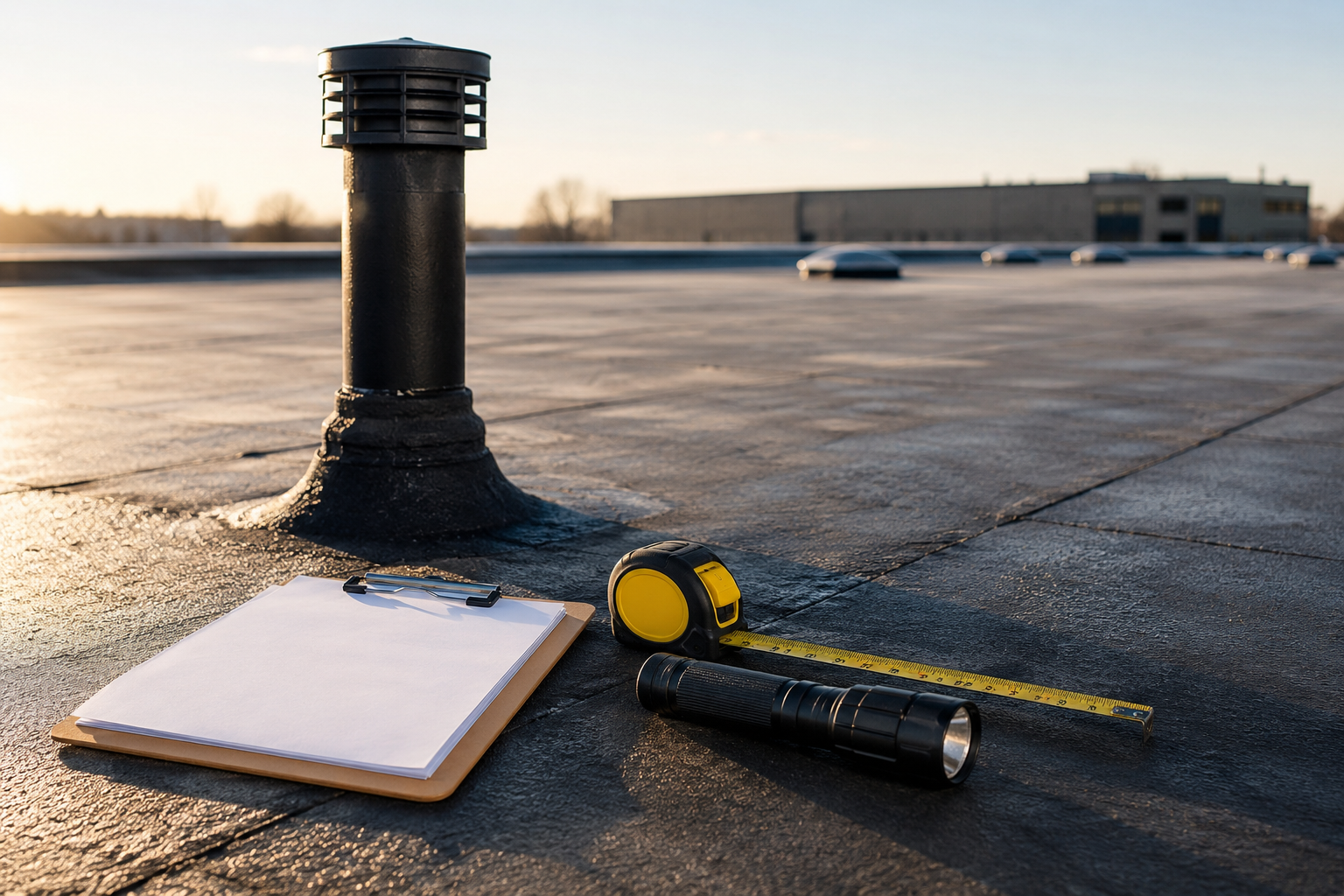
A solid plan typically includes a biannual inspection schedule, paired with prompt follow-up after any significant storm. We look at flashing, drainage, membrane condition, and rooftop equipment seals, document everything with photos, and provide straightforward recommendations rather than padding a scope of work with unnecessary line items.
The math on roof maintenance is straightforward once you see it laid out. A targeted repair, replacing a section of flashing or resealing a seam, typically costs a fraction of what a full commercial re-roofing project runs.
In the Baton Rouge market, a full commercial roof replacement generally falls somewhere between $6 and $12 per square foot, depending on the material and roof condition, so a building with even moderate square footage is looking at a project that can stretch into the tens of thousands of dollars, or more for larger facilities.
Compare that to routine maintenance costs, which are a small recurring expense, and the value of staying ahead of problems becomes clear. Beyond direct repair costs, a well-maintained roof also protects your building’s energy efficiency.
A compromised membrane or missing insulation lets conditioned air escape, which means your HVAC system works harder and your utility bills climb, often before anyone realizes the roof is the culprit.
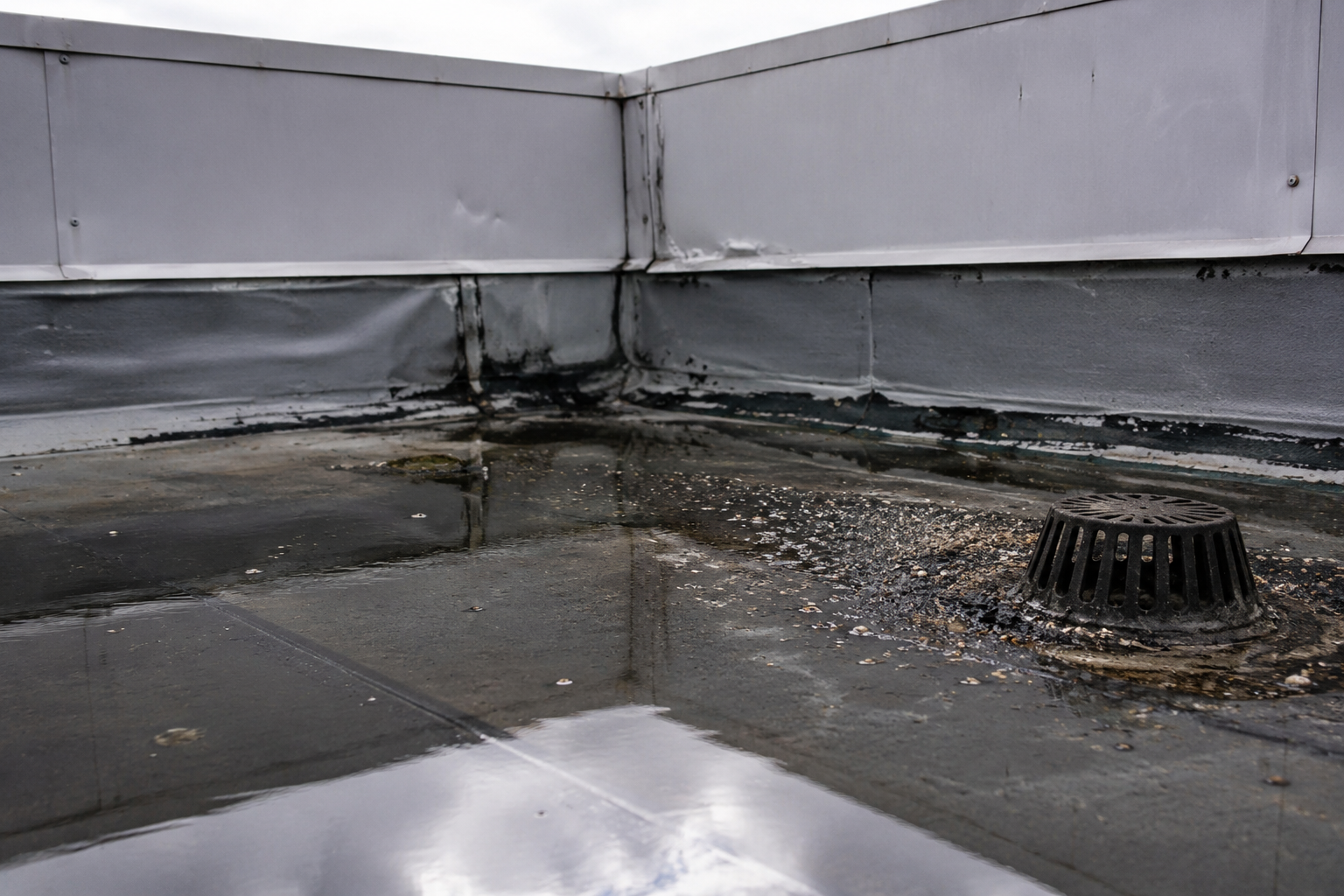
Some warning signs are visible from ground level; others only show up once you’re on the roof or in the building. Knowing what to look for helps you act before a manageable issue becomes a major one.
If any of these sound familiar, an inspection should move to the top of the list rather than waiting for the next scheduled visit.
Regular roof maintenance is one of the most cost-effective investments a Baton Rouge property owner can make in protecting a commercial building. Red Stick Construction offers free estimates and inspections for commercial properties throughout the greater Baton Rouge and New Orleans area. Reach out to our team to schedule an assessment before small issues turn into expensive ones.
Twice a year is a reasonable baseline for most commercial properties in South Louisiana, once after hurricane season ends in late fall and again in spring before summer heat and storm activity ramp up. Roofs older than 15 years, or roofs that have already taken storm damage, benefit from more frequent professional inspections.
Lifespan depends heavily on material. TPO and EPDM membrane systems generally last 20 to 30 years, while standing seam metal roofing can reach 40 years or more with proper maintenance. Louisiana’s heat and humidity tend to push roofs toward the shorter end of these ranges when maintenance is inconsistent.
Coverage typically depends on the cause. Sudden storm, wind, or hail damage is usually covered under a standard commercial property policy, while gradual deterioration from age or deferred maintenance generally is not. Documented maintenance records make it easier to support a claim when storm damage does occur.
The decision usually comes down to the roof’s age, the extent of the damage, and how widespread the issues are. Isolated problems on a roof with significant remaining service life are usually a good candidate for repair. Widespread membrane failure, a roof approaching the end of its expected lifespan, or recurring issues in the same areas typically point toward replacement, offering better long-term value. A professional inspection gives you the information needed to make that call confidently.