


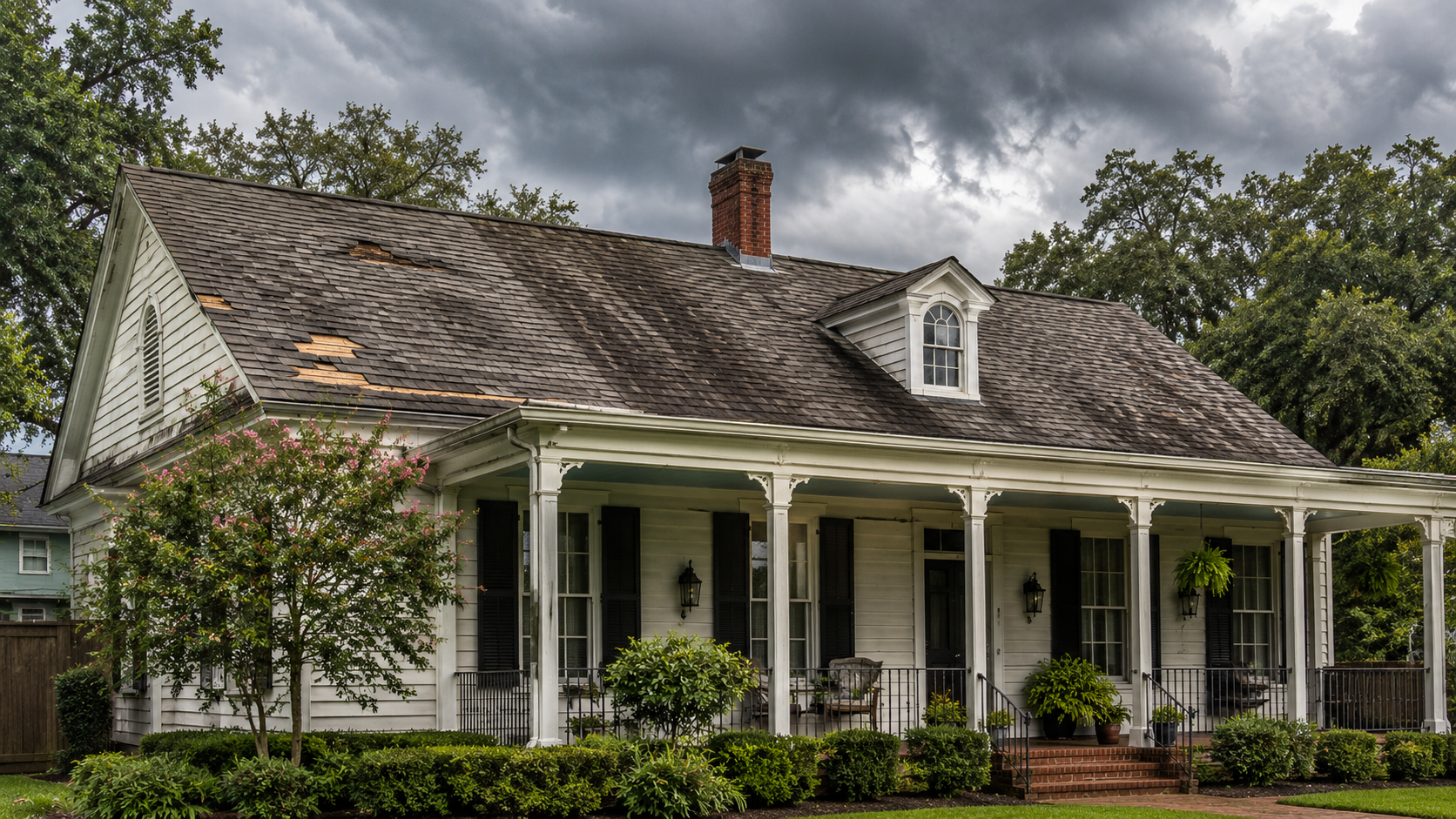
Your roof is the first line of defense between your home and Louisiana’s punishing weather. When roof damage starts, it rarely announces itself with a dramatic collapse; it creeps in quietly through missing shingles, subtle stains, and barely visible sagging. For homeowners across Baton Rouge, New Orleans, Metairie, and the surrounding communities, knowing what to look for early is the difference between a straightforward repair and a five-figure replacement.
This guide walks you through the most common early warning signs of roof damage, what causes them, and what to do when you spot something that doesn’t look right.
Louisiana’s climate is among the most demanding in the country for residential roofing. The combination of intense heat, near-constant humidity, heavy seasonal rainfall, and hurricane-force winds creates conditions that accelerate wear on virtually every roofing material: asphalt shingles, wood shake, metal, tile, and everything in between.
In Baton Rouge and south Louisiana, many homeowners go months or even years without inspecting their roofs up close. It’s easy to overlook the exterior of your home when nothing is visibly leaking inside. But by the time water stains appear on your ceiling, the damage above has already had time to spread, often into the decking, insulation, and even the structural framing beneath.
The Gulf South storm season adds another layer of urgency. Wind events, even those well below hurricane strength, can loosen flashing, lift shingles, and open gaps that allow water infiltration during the next rainfall. Catching these vulnerabilities before storm season ramps up could mean the difference between a minor repair and a full-scale emergency.
The earlier you catch roof problems, the simpler and less expensive the fix. Here are the most common signs that something is wrong, many of which are visible without ever climbing a ladder.
Individual shingles that are missing, curling at the edges, or visibly cracked are one of the clearest signs that your roof needs attention. Shingles curl for two main reasons: improper ventilation, causing heat buildup underneath, or shingles that have simply reached the end of their service life and lost their flexibility.
Missing shingles create immediate exposure points. Even a single absent shingle leaves the underlying decking vulnerable to rainfall and UV degradation. In Louisiana, where afternoon thunderstorms can arrive without much warning, that exposure can lead to water infiltration in a matter of hours.
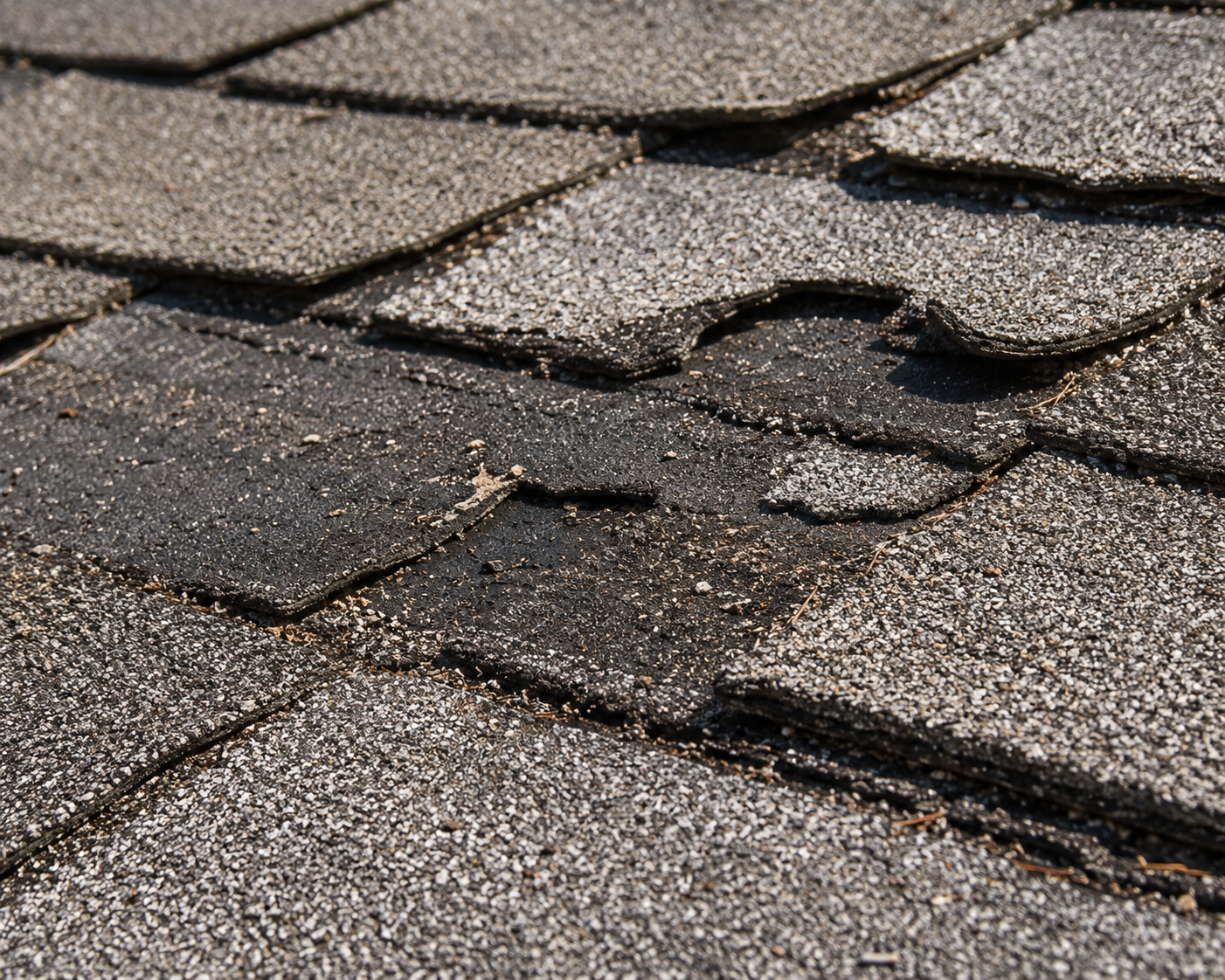 Shingles that appear raised or wavy along their edges rather than lying flat
Asphalt shingles are coated with small granules that protect the material from UV rays and add weather resistance. As shingles age or sustain impact damage, these granules loosen and wash off into your gutters and downspouts.
Finding a significant volume of granules in your gutters, especially after a rainstorm, is a reliable indicator that your shingles are deteriorating. New roofs will shed a small amount of granules initially, but ongoing granule loss from an established roof signals accelerated aging.
Flashing is the metal material installed at joints, valleys, and transitions on your roof around chimneys, skylights, vents, and dormers. It’s designed to direct water away from these vulnerable connection points and into your guttering system.
Flashing failure is one of the most common sources of roof leaks, and it often goes unnoticed because the damage isn’t visible from the ground. When flashing pulls away from a chimney or cracks at a seam, water finds a direct path into your home’s wall cavities and ceiling.
If you’re seeing brown or yellowish stains on your interior ceilings, water is getting in somewhere above. This is one of the most visible signs of roof damage, but it’s also one of the later ones. By the time staining is apparent inside the home, the roof, underlayment, and insulation have likely already been compromised.
Water stains don’t always appear directly below the source of the leak. Water travels along rafters and decking before dripping, which means the visible interior stain may be several feet away from the actual entry point.
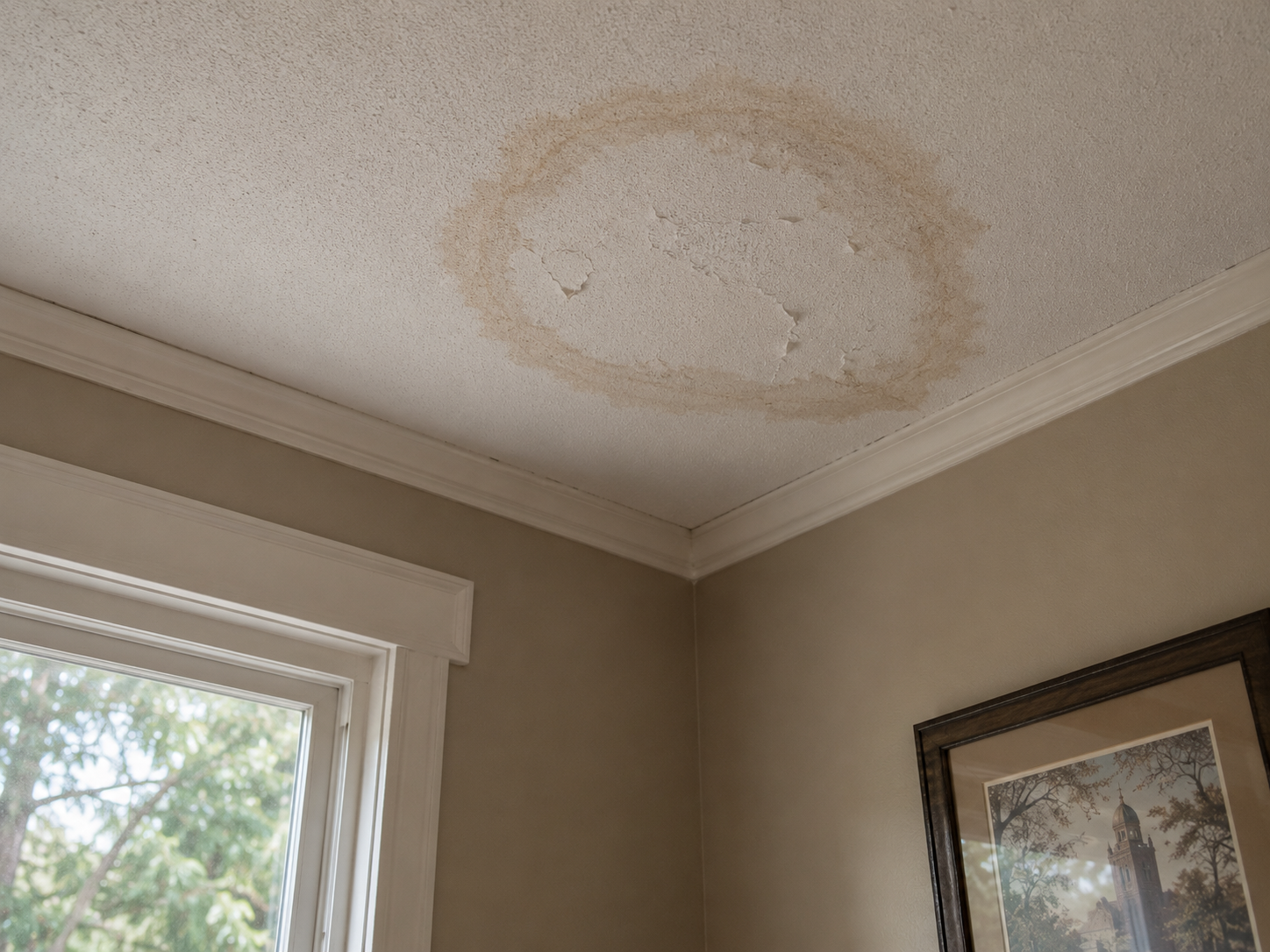 A brown ring-shaped stain on a ceiling typically points to an active or recent leak rather than condensation
A roof surface that appears to sag, bow, or dip inward is a serious warning sign. Healthy rooflines should appear straight and even from the ground. Any visible depression, wave, or asymmetry in the roofline suggests that the decking below the shingles has absorbed significant moisture and begun to weaken.
This type of structural damage doesn’t happen overnight. It’s the result of prolonged water infiltration that has saturated the plywood or OSB decking to the point of deterioration. If sagging is visible, the problem almost certainly extends into the framing underneath and requires professional assessment without delay.
Dark streaks running down a roof’s surface are typically caused by algae growth, specifically Gloeocapsa magma, a bacterium that feeds on the limestone filler in asphalt shingles. While this streaking looks cosmetic at first, the algae actually degrades shingle material over time and accelerates granule loss.
Moss is more immediately damaging. It holds moisture against the surface of shingles and works its way beneath them, lifting edges and creating pathways for water infiltration. In shaded areas of a roof that don’t dry out quickly, moss can cause significant shingle damage within just a few seasons.
A roof that has lost its integrity often loses its insulating efficiency along with it. When moisture infiltrates the attic space, it compromises the insulation beneath the decking. When flashing or shingles fail, outside air infiltrates the attic, and your HVAC system has to work harder to maintain comfortable temperatures.
A noticeable and unexplained increase in cooling costs during Baton Rouge’s long, hot summers can sometimes be traced directly back to roof-related issues rather than HVAC equipment failure. If your energy bills are climbing and your equipment checks out, an attic and roofing inspection is a logical next step.
Understanding the root causes of roof failure helps you make smarter maintenance decisions and recognize early warning signs before they escalate.
Hurricane season from June through November is the obvious concern, but storm damage occurs year-round in Louisiana. Standard summer thunderstorms can produce wind gusts capable of lifting shingles, bending flashing, and driving rain beneath even properly installed roofing materials. After any significant storm event, a visual inspection from the ground is worth doing while the details of the weather event are fresh.
Most asphalt shingle roofs have a functional lifespan of 20 to 30 years under typical conditions. In Louisiana’s climate, with its combination of UV exposure, heat, and humidity, that lifespan may be shorter. Roofs approaching or exceeding their expected service life are more vulnerable to all of the issues described above and warrant closer monitoring.
Attic ventilation is one of the most underappreciated factors in roofing system longevity. Without proper airflow, heat and moisture build up in the attic space and attack roofing materials from below. This accelerates shingle aging, causes decking to deteriorate, and can lead to moisture damage in insulation and framing long before any visible sign appears from the outside.
Not every sign of roof damage requires a full replacement, but all of them require honest evaluation. Here is how to approach the situation methodically.
Getting a professional inspection early keeps you from guessing and ensures you understand the real scope of what needs to be done before costs escalate.
Red Stick Construction provides free estimates and has completed roofing projects throughout Baton Rouge, New Orleans, Metairie, Covington, Mandeville, Slidell, and beyond. Our roofing team brings direct experience with Louisiana’s specific climate demands to every project.
Beyond the roof itself, homeowners sometimes discover that moisture infiltration has reached exterior wall systems as well, which is why our experience in demolition and structural remediation can be valuable when damage has gone deeper than the surface. For homes that need broader exterior attention alongside roofing, our concrete services, fencing, and iron works round out a comprehensive exterior restoration.
Roof damage is almost always cheaper to address early than late. A missing shingle addressed immediately might cost a few hundred dollars. Left for a season, that same entry point can allow enough water infiltration to damage decking, insulation, and interior drywall, turning a small repair into a project costing several times as much.
The math is straightforward, but the challenge is that roof damage is easy to put off. It’s not in front of you every day. There’s no drip on the floor to step around, no smell to investigate. The damage accumulates invisibly until it crosses a threshold where it can no longer be ignored, and at that point, the repair cost has already multiplied.
If any of the warning signs described in this guide sound familiar or if it has simply been a while since anyone has taken a close look at your roof, now is the right time to act.
Red Stick Construction offers free estimates and serves homeowners across South Louisiana. Reach out to our team to schedule an inspection and get a clear picture of where your roof stands before minor issues become major expenses.
Twice a year is a reasonable baseline for most South Louisiana homeowners, once after hurricane season ends in late fall, and again in spring before the heat and storm season resumes. After any significant wind or hail event, a prompt visual inspection from the ground is also worth doing. Roofs over 15 years old benefit from annual professional inspections even without a triggering event.
A ground-level visual inspection scanning for missing shingles, visible damage, dark streaks, or sagging is something any homeowner can do safely. Binoculars help. However, getting on the roof requires proper safety precautions, and assessing the condition of flashing, underlayment, and decking from close range is best done by someone with roofing experience. Professional inspections are particularly valuable for older roofs or after storm events.
Coverage depends on the cause. Sudden storm damage, wind damage, and impact damage from hail or falling debris are typically covered under standard homeowners’ policies. Gradual deterioration from age or lack of maintenance generally is not. After any storm event, document visible damage with photographs before any repairs begin, and contact your insurance provider before work starts. Louisiana’s Department of Insurance can provide guidance on your specific policy.
The answer depends on the age of the roof, the extent of the damage, and how much of the surface has been affected. A targeted repair makes sense for localized issues on a roof that still has significant functional life remaining. When damage is widespread, when the roof is approaching or beyond its expected lifespan, or when the same areas are experiencing repeated problems, replacement typically provides better long-term value. A professional inspection gives you the information needed to make that call with confidence.